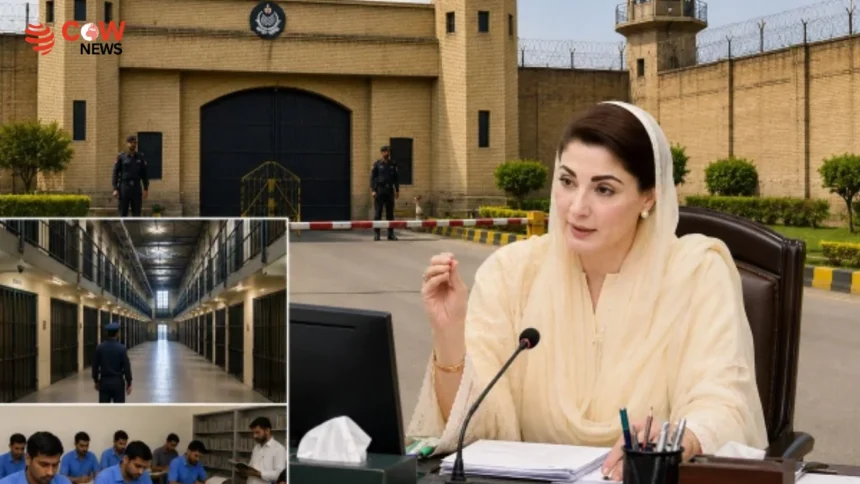
World ( The cow news digital ) The Punjab government has approved a comprehensive set of reforms aimed at transforming the province’s prison system from traditional punitive facilities into modern rehabilitation centers. The decision was made during a high-level meeting chaired by Chief Minister Maryam Nawaz Sharif, where officials reviewed ongoing jail conditions, overcrowding issues, infrastructure gaps, and inmate welfare programs.
According to officials, Punjab’s prisons are currently housing between 68,000 and 79,000 inmates, despite having a combined capacity of only around 39,000. To address this severe overcrowding, the government has initiated the construction of new barracks and is building new prisons in districts including Chiniot and Murree. The province also plans to increase total prison capacity to 43,718 by 2027.
A key part of the reform agenda includes upgrading transportation facilities for inmates. The Chief Minister directed that 30 prison vans used for prisoner transfer be modernized with air conditioning, surveillance cameras, onboard washrooms, monitoring screens, and improved seating arrangements to ensure safer and more humane transport conditions.
The meeting also reviewed progress on the construction of new modern women’s prisons in Lahore, Faisalabad, and Rawalpindi, along with upgrades to juvenile facilities and borstals. Authorities emphasized improving rehabilitation programs, particularly for young offenders.
In a significant move toward legal support, the government announced plans to activate the Legal Aid Agency to provide free legal assistance to underprivileged inmates. Health reforms include regular inspections of prison hospitals through the Punjab Healthcare Commission, improved nutrition plans, weekly diet monitoring, and the distribution of hygiene kits. Mental health support has also been expanded with the deployment of 74 psychologists across various prisons.
Education and skill development remain central to the reform strategy. More than 4,000 inmates are currently enrolled in literacy programs, while thousands more are receiving vocational training in trades such as welding, computer skills, motorbike and tractor repair, cooking, and textile production. Several prisons have established industrial units where inmates produce goods including furniture, carpets, tiles, soaps, and electrical items.
Read more
- Pakistan, Taliban, and Afghanistan: The Complex Triangle of Influence
- Trump Hopes Iran Talks Succeed, Warns Against Midnight Hammer
The government also reported progress in digitizing inmate communication, allowing audio and video calls with families, along with weekly monitored calling time.
Chief Minister Maryam Nawaz emphasized that prison reforms aim to uphold human dignity, ensure access to education and healthcare, and support the reintegration of inmates into society as productive citizens.