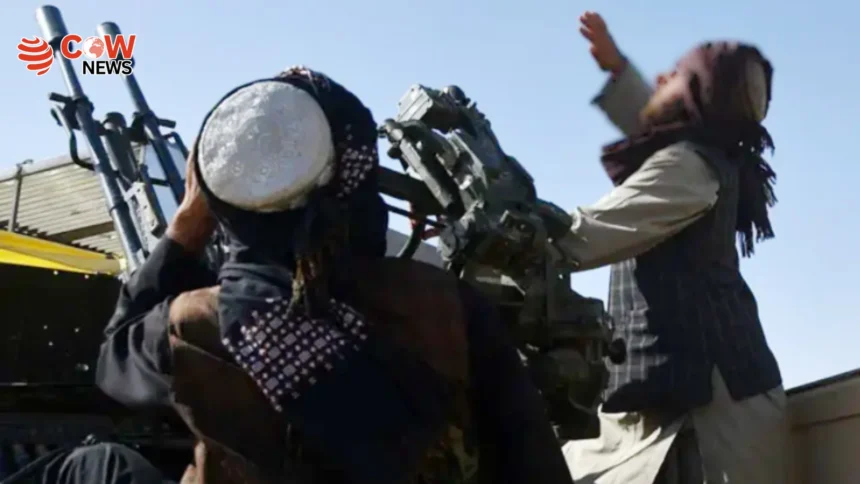
World ( The cow news digital ) Concerns over governance in Afghanistan are reportedly increasing as segments of the country’s political leadership and public voices express growing distrust in the Taliban administration. Calls for political reform, broader participation, and institutional restructuring are gaining momentum amid ongoing uncertainty about the country’s future direction.
According to Afghan media outlet Amoo TV, prominent political figure and leader of the Hezb-e-Islami party, Gulbuddin Hekmatyar, has publicly described the current Taliban administration as unacceptable in its present form. He has called for immediate political reforms and the establishment of transparent elections to restore public confidence in governance.
Hekmatyar stated that the current system does not reflect the aspirations of the Afghan people and lacks essential political mechanisms, including a functioning constitution and representative council structures. He argued that without such foundational elements, long-term stability in Afghanistan cannot be achieved.
His remarks add to a growing chorus of criticism from various Afghan political factions, many of whom are based both inside and outside the country. Opposition voices have increasingly questioned the legitimacy and inclusiveness of the current governance structure, urging the creation of a broader political framework that includes diverse stakeholders.
Separately, representatives of the Hezb-e-Wahdat-e-Islami Afghanistan have stated that political leaders in exile will not return to the country unless a system based on public mandate and democratic principles is established. They warned that failure to adopt such reforms could further deepen the ongoing political crisis and instability.
Analysts observing the situation note that dissatisfaction is not limited to political elites alone. Reports suggest that segments of the Afghan population are also expressing concerns about restrictive policies and governance approaches, contributing to a broader debate about the country’s political future.
READ MORE
- Imran Khan and the Politics of Idolization
- Pakistan, Taliban, and Afghanistan: The Complex Triangle of Influence
Experts believe that the absence of inclusive political institutions and limited public participation in decision-making processes are key factors driving calls for change. They argue that sustainable stability in Afghanistan will depend on political reconciliation and the development of a more representative governance model.
As internal and external pressures continue to mount, Afghanistan’s political landscape appears to be entering a phase of increased debate and uncertainty over its long-term direction.