
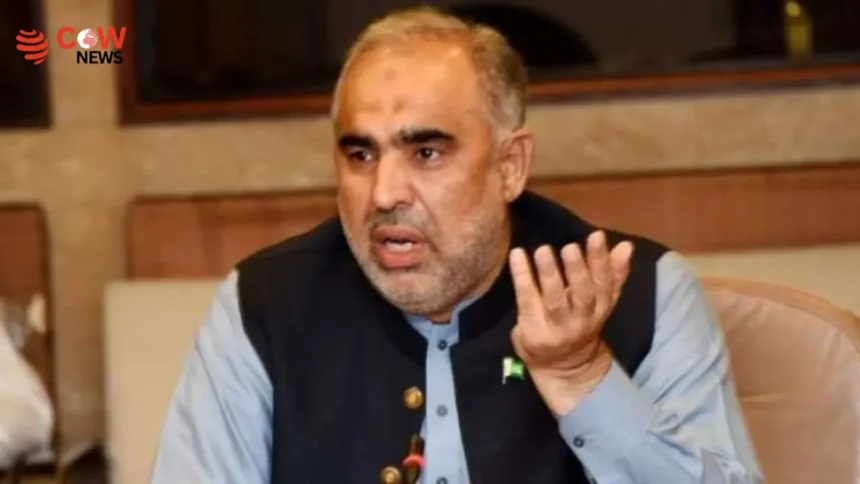
Islamabad(The COW News Digital)Former National Assembly speaker and Pakistan Tehreek-e-Insaf (PTI) leader Asad Qaiser has strongly criticized the federal government over the recent increase in petroleum prices, accusing it of placing an additional financial burden on already struggling citizens.
In a statement posted on social media platform X, Qaiser said the government had chosen to increase petrol and diesel prices by Rs55 per litre instead of providing relief through a reduction in petroleum levy and taxes. According to him, the decision reflects the government’s failure to control its own expenditures while repeatedly shifting the burden onto the public.
Qaiser argued that the authorities should have prioritized reducing unnecessary spending and offering economic relief to the people, particularly at a time when inflation continues to affect households across the country. He described the latest increase as another “petrol bomb” dropped on the public, warning that such decisions would further worsen the financial difficulties faced by ordinary citizens.
read more
- Pakistan, Taliban, and Afghanistan: The Complex Triangle of Influence
- Imran Khan and the Politics of Idolization
The PTI leader highlighted that the government is already collecting nearly Rs100 per litre in the form of petroleum levy and other taxes on petrol. Instead of lowering these charges to ease the pressure on consumers, he said, the authorities opted to increase fuel prices even further. This move, he added, demonstrates a lack of concern for the economic hardships experienced by the public.
Qaiser stressed that petroleum prices have a direct impact on the overall cost of living. When fuel prices rise, transportation costs increase, which subsequently pushes up the prices of food items, utilities, and other essential goods. He warned that the latest hike would likely trigger another wave of inflation in markets across the country.
He also urged the government to reconsider its economic policies and adopt measures aimed at protecting citizens from further financial stress. According to Qaiser, sustainable economic management requires reducing government spending, improving fiscal discipline, and offering relief to the public rather than imposing additional taxes.
The recent fuel price adjustment has already sparked criticism from opposition leaders and concerns among consumers. Many economists believe that rising petroleum prices could intensify inflationary pressures, affecting both businesses and households in the coming weeks.
With inflation remaining a major challenge for Pakistan’s economy, political debate over taxation, government spending, and energy pricing is expected to intensify as opposition parties continue to question the government’s economic decisions.