

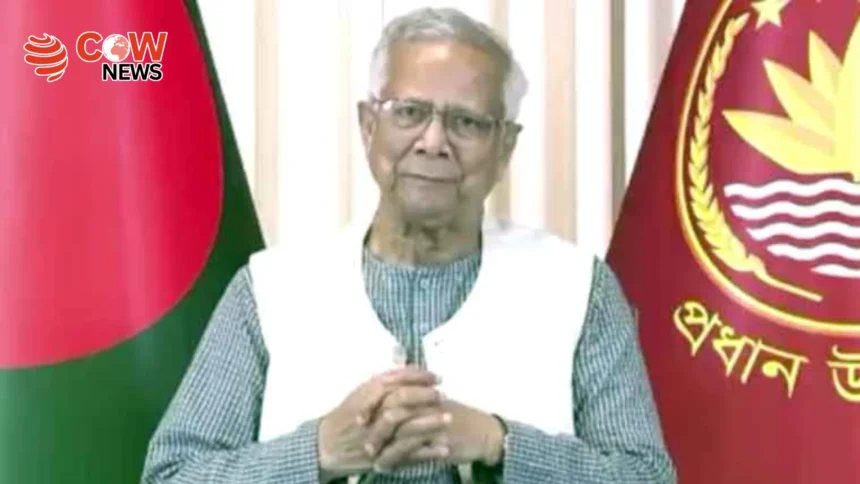
DHAKA(The COW News Digital) Mohammad Yunus, the interim head of Bangladesh, has officially resigned from his position, paving the way for the newly elected government. In a nationwide address, Yunus stated that the transitional administration is stepping down following a historic general election.
“The interim government is now retiring, and the path has been cleared for the incoming elected government,” Yunus said. He expressed hope that democratic processes, freedom of expression, and fundamental rights would continue to be upheld in Bangladesh.
Yunus also lauded the success of the Bangladesh Nationalist Party (BNP) in the recent elections, congratulating its leader Tarique Rahman. “Voters and political parties have set an example that will strengthen democratic practices in the future,” he added.
The interim government had been in place for approximately 18 months, following the conclusion of Sheikh Hasina’s administration in 2024. During this transitional period, Yunus oversaw the political and administrative processes that guided the nation toward a credible general election.
Read More:
- Imran Khan and the Politics of Idolization
- Deadly Islamabad Attack Highlights Pakistan’s Regional Challenges
- Pakistan’s Silence Spoke Loudly and World Cricket Felt the Shock
In last week’s general election, the BNP secured a two-thirds majority, marking a decisive victory and signaling a major shift in Bangladesh’s political landscape. The election results have allowed the new government to prepare for the formal handover of power.
Political analysts note that Yunus’ resignation underscores the importance of institutional continuity in transitional governments and reflects Bangladesh’s commitment to democratic governance. By stepping down in a timely manner, the interim administration has reinforced public trust in the electoral process and the peaceful transfer of power.
Observers highlight that the successful completion of this electoral transition sets a precedent for future interim governments and emphasizes the growing maturity of democratic norms in Bangladesh. The BNP’s electoral success also raises expectations for policy reforms and socio-economic initiatives under the new leadership.
With Yunus’ departure, attention now turns to the incoming government and its ability to maintain stability, uphold civil liberties, and implement its policy agenda effectively. Citizens and international observers alike will be watching closely as Bangladesh enters this new phase of governance.