
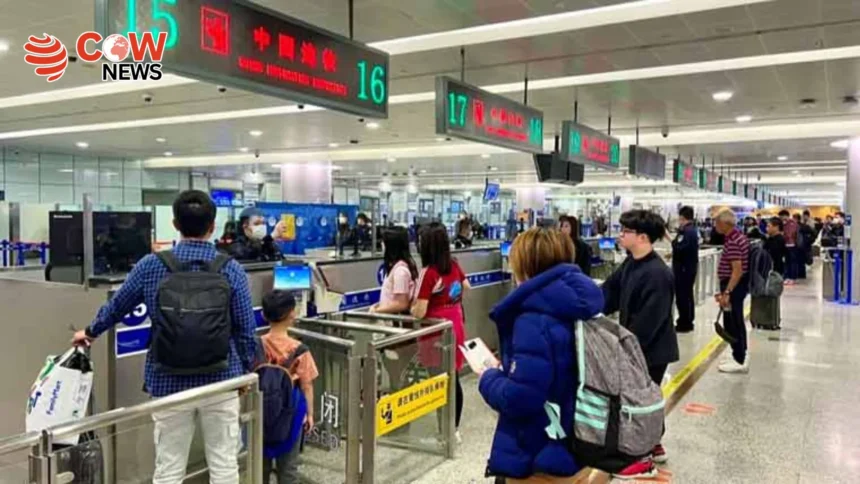
BEIJING(The COW News Digital)China has announced visa-free entry for citizens of United Kingdom and Canada, allowing travelers to visit the country for up to 30 days without a visa. The policy will come into effect on Tuesday and remain valid until December 31, 2026, according to the Chinese Ministry of Foreign Affairs.
The move follows recent visits by British Prime Minister Keir Starmer and Canadian Prime Minister Mark Carney to Beijing, where both leaders met with Chinese President Xi Jinping and other senior officials to strengthen bilateral ties.
Under the new policy, holders of standard passports from the UK and Canada can travel to China for tourism, business, visiting relatives or friends, exchange programs, or transit purposes for up to 30 days. Chinese authorities emphasized that the initiative aims to promote people-to-people connections and encourage cultural, economic, and social exchanges between the countries.
Read More:
- From Silence to Power: Pakistan’s Decision That Shook World Cricket
- Deadly Islamabad Attack Highlights Pakistan’s Regional Challenges
- Trump Hopes Iran Talks Succeed, Warns Against Midnight Hammer
In addition to these visa-free arrangements, China’s top diplomat Wang Yi met German Chancellor Friedrich Merz at the Munich Security Conference. Beijing expressed its desire to elevate its comprehensive strategic partnership with Germany to a new level, signaling China’s broader efforts to strengthen ties with Europe.
Experts note that the move is part of China’s strategy to enhance international relations and increase engagement with Western countries, particularly at a time when Europe is seeking a balanced approach in its foreign policy. The visa-free entry is expected to boost tourism, facilitate business activities, and deepen diplomatic and cultural interactions between China, the UK, and Canada.
Analysts say this step reflects China’s intent to expand its global influence while fostering practical and people-centered cooperation. By easing travel restrictions, Beijing aims to create a more open environment for exchanges in trade, education, and tourism, which could have positive economic and diplomatic outcomes for all parties involved.