

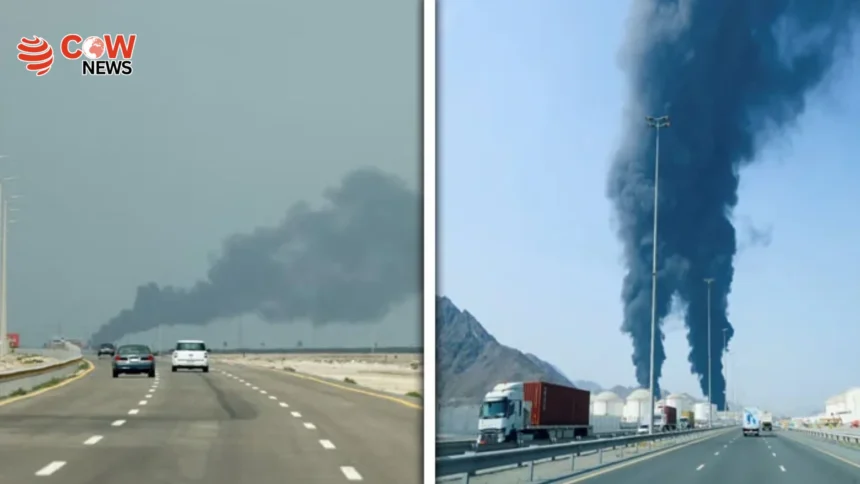
World ( The cow news digital ) Several Gulf countries have been placed on high alert following a series of reported missile and drone attacks targeting strategic locations across the region, raising fears of a broader escalation in Middle East tensions.
According to official statements and regional media reports, Bahrain, the United Arab Emirates (UAE), Saudi Arabia, and Kuwait have strengthened their security posture after unidentified aerial threats were detected in their airspace. Authorities have urged citizens to remain vigilant and follow emergency safety instructions.
In Bahrain, the Ministry of Interior activated emergency sirens after detecting potential incoming threats. Residents were advised to move immediately to secure shelters as precautionary measures were implemented across sensitive installations.
The United Arab Emirates’ Ministry of Defense confirmed that its air defense systems intercepted and destroyed multiple incoming missiles and drones. Officials stated that the country’s integrated defense network is fully operational and continues to monitor regional airspace for further threats.
In Saudi Arabia, reports indicated that an industrial petrochemical facility in the Jubail area was targeted, resulting in a fire outbreak. Although the exact cause remains under investigation, Saudi defense authorities confirmed that seven ballistic missiles aimed at eastern regions were successfully intercepted before reaching their targets. However, falling debris reportedly caused limited damage to energy infrastructure.
Kuwait also reported a security incident at the Ali Al-Salem Air Base, where drone activity led to injuries among stationed personnel. U.S. officials confirmed that around 15 American service members were wounded during the incident, according to statements shared with international media.
The growing wave of attacks has intensified regional concerns, with defense systems across Gulf states placed on heightened alert. Military coordination among Gulf Cooperation Council (GCC) members has reportedly increased to counter potential further threats.
Security analysts warn that continued strikes on energy and military infrastructure could destabilize global oil markets and significantly escalate geopolitical tensions. Calls for restraint and renewed diplomatic engagement have been issued by several international observers, urging all parties to prevent further escalation.
As investigations continue, Gulf nations remain on alert, with air defense systems actively tracking possible incoming threats and emergency protocols in place across key strategic sites.