World ( The cow news digital ) The International Monetary Fund has warned that a prolonged conflict involving Iran could significantly worsen global economic conditions, particularly if the war continues until 2027 and oil prices remain elevated.
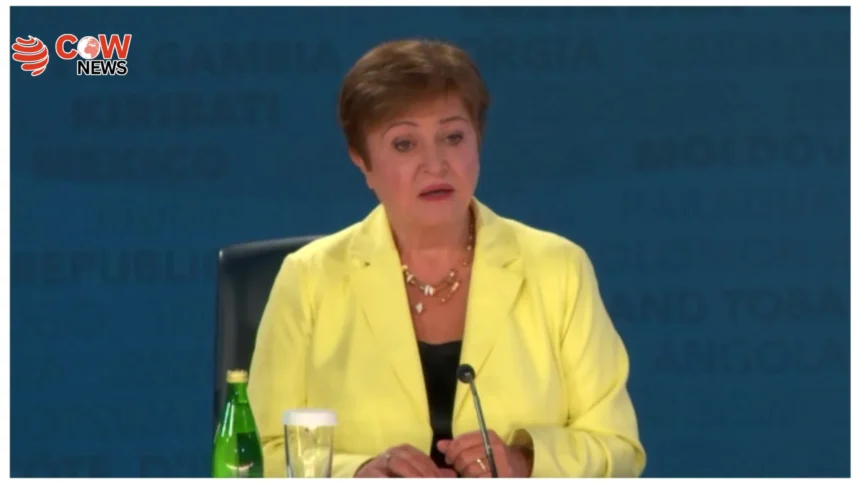
According to Managing Director Kristalina Georgieva, the global economic outlook would deteriorate sharply if geopolitical tensions in the Middle East persist and crude oil prices stay around 125 dollars per barrel. She stated that under such a scenario, global markets could face deeper instability, higher inflation, and slower economic growth than previously projected.
The IMF, formally known as the International Monetary Fund, had earlier forecast that the conflict involving Iran, the United States, and Israel would lead to a moderate slowdown in global growth and a limited rise in inflation. However, Georgieva noted that recent developments have made those earlier projections less reliable and potentially outdated.
She emphasized that prolonged instability in energy-producing regions poses a major risk to global supply chains, particularly in oil and gas markets. Rising energy costs, she warned, would likely feed into transportation, manufacturing, and food prices, placing additional pressure on both advanced and developing economies.
The IMF chief further cautioned that sustained high oil prices could undermine economic recovery efforts in several regions still struggling with post-pandemic debt and inflation challenges. Emerging markets, in particular, could face capital outflows and currency depreciation if global financial conditions tighten further.
Georgieva’s remarks come amid growing concerns over escalating tensions in the Gulf region, where maritime routes play a critical role in global energy transportation. Analysts have repeatedly warned that any disruption in this area could have immediate and far-reaching consequences for global trade.
The IMF has urged policymakers worldwide to prepare contingency plans, strengthen energy security strategies, and reinforce international cooperation to mitigate potential shocks.
read more
- US Envoy Backs Israel’s Claim to Wider Middle East
- China Urges Global Support for Sustainable Sudan Solution
Economic experts say the warning highlights the fragile nature of the global recovery and the extent to which geopolitical conflicts can influence inflation, investment flows, and long-term growth prospects.
As uncertainty continues to rise, attention is now focused on diplomatic efforts aimed at preventing further escalation and stabilizing energy markets.