
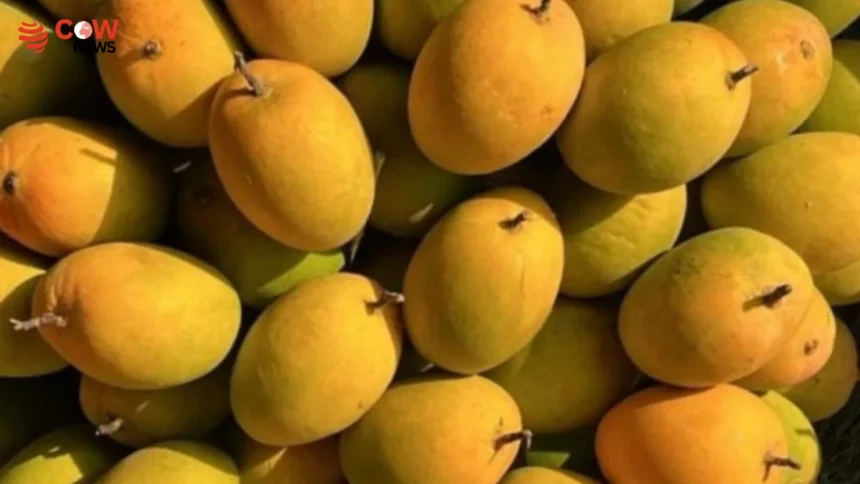
World ( The cow news digital ) India’s famous Alphonso mango, often referred to as the “king of mangoes,” has suffered a dramatic decline in production this year, with reports indicating losses of up to 90 percent due to extreme weather conditions.
According to data from the research and ratings agency Crisil, India remains the world’s largest mango producer, with total output reaching approximately 28 million metric tonnes during the 2024–2025 period. However, the situation for premium varieties such as Alphonso has been significantly worse this season.
The western state of Maharashtra, known for producing the highly prized Alphonso mangoes, has been particularly affected. Agricultural officials and local farmers report that unusual temperature fluctuations between day and night during December and January severely damaged flowering and fruit formation, leading to a sharp decline in yield.
A senior agricultural officer from a village in Maharashtra, Bapu Saheb Manekrao Limbade, noted that the extreme weather conditions disrupted the natural growth cycle of mango trees. He explained that both flowering and early fruit development stages were impacted, resulting in significantly reduced production.
A government-supported survey conducted earlier this year by scientists and field officials estimated production losses between 85 and 90 percent. A copy of the survey reviewed by Reuters confirmed that the extreme heat and weather instability were key factors behind the collapse in output.
Farmers, traders, exporters, and government officials across multiple districts in Maharashtra have reported similar findings, describing this year’s harvest as one of the weakest in decades. Many growers said that the losses are severe and unprecedented, affecting both domestic supply and export potential.
The sharp decline in Alphonso mango production is expected to impact market prices significantly, with limited supply likely to push costs higher in both local and international markets. Exporters are also concerned about fulfilling seasonal demand from key importing countries.
Experts warn that such extreme weather patterns could pose long-term risks to fruit cultivation in the region if climate variability continues to intensify. Agricultural authorities are now being urged to explore adaptive farming techniques and climate-resilient crop management strategies.
As the situation develops, stakeholders in the agriculture sector are closely monitoring the impact on supply chains and export commitments for one of India’s most iconic fruits.