
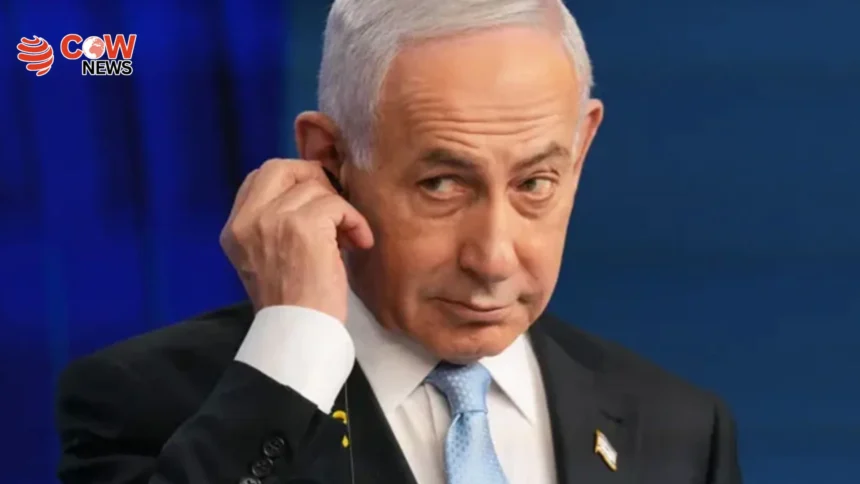
World ( The cow news digital ) Public discontent is growing in Israel following recent ceasefire-related developments involving Iran and Lebanon, with Prime Minister Benjamin Netanyahu facing increasing political and public criticism over his handling of the situation.
According to a survey cited by Al Jazeera, around 61 percent of Israeli citizens oppose the recent ceasefire arrangements linked to regional tensions. The survey further indicates that 73 percent of respondents believe there is a strong possibility of renewed conflict with Iran within the next year.
The findings, released by the Israel Institute for National Security Studies, suggest widespread disappointment among the Israeli public, particularly over what many perceive as an incomplete strategic outcome against Iran’s military and nuclear capabilities. A significant portion of respondents reportedly believe that the government failed to achieve its stated objectives during the conflict.
Opposition leaders have also intensified criticism of Netanyahu’s government. Former Prime Minister Yair Lapid described the ceasefire-related outcome as a governmental failure, while political figure Yair Golan called it a major strategic setback for Israel.
Analysts suggest that public frustration is partly driven by earlier expectations set by the government, which had pledged decisive action against Iran’s nuclear and missile infrastructure. Critics argue that these goals were not fully realized, leading to perceptions of political overstatement and unmet military objectives.
The survey also highlights that 69 percent of Israeli citizens support continued military operations in Lebanon, where recent strikes have reportedly resulted in significant casualties. This reflects ongoing domestic support for a hardline security approach, despite growing international calls for de-escalation.
Experts note that Israel’s strategic decisions remain closely tied to support from the United States, limiting the scope of independent military escalation. Some analysts argue that without strong US backing, Netanyahu’s government faces constraints in taking further direct action against Iran.
read more
- China Urges Global Support for Sustainable Sudan Solution
- US Envoy Backs Israel’s Claim to Wider Middle East
The political fallout comes at a sensitive time for Netanyahu, who continues to face scrutiny over security failures linked to the events of October 7, 2023. Domestic opposition groups have intensified calls for accountability, arguing that recent developments further weaken the government’s credibility on national security issues.
As regional tensions persist, Israel’s internal divisions over war strategy and diplomacy appear to be deepening, raising questions about the country’s future approach toward Iran and Lebanon.