

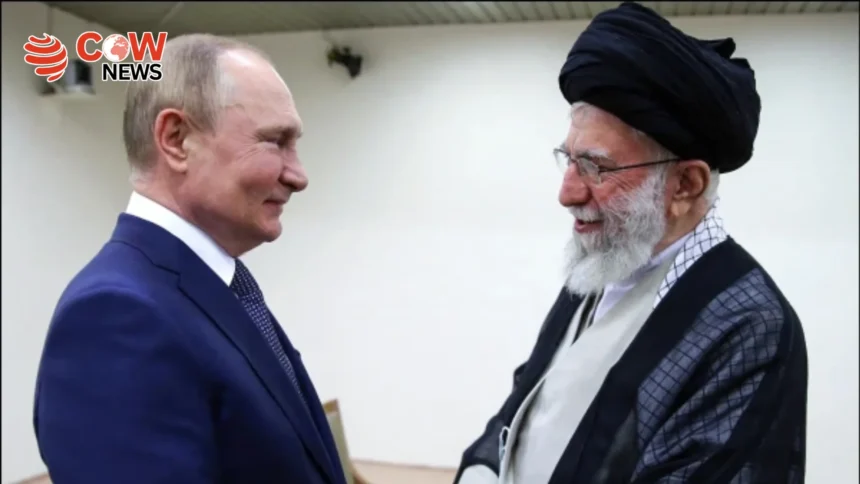
Russia (The COW News Digital)Russia secretly transferred nearly $2.5 billion in cash to Iran in 2018 in an alleged attempt to bypass United States sanctions, according to an investigative report published by the British newspaper
The report claims that the funds were moved through Russia’s state-owned Promsvyazbank in 34 large cash shipments, which were ultimately delivered to Iran’s central bank in Tehran. The total weight of the cash consignments was estimated to be around five tonnes, highlighting the scale and secrecy of the operation.
According to documents cited in the report, the transfers took place at a time when then US President Donald Trump had reimposed strict economic sanctions on Iran following Washington’s withdrawal from the Iran nuclear deal. Each shipment was reportedly valued between $57 million and $115 million, with much of the cash consisting of high-denomination European currency notes.
Read More:
- Trump Hopes Iran Talks Succeed, Warns Against Midnight Hammer
- Pakistan’s Silence Spoke Loudly and World Cricket Felt the Shock
- CENTCOM Warns Iran’s Revolutionary Guards Against Unsafe Acts
Analysts quoted in the report suggest that the payments point to increasingly close financial and strategic ties between Moscow and Tehran. Some experts believe the cash transfers may have been linked to arms deals or military cooperation, although no official confirmation of the purpose of the payments has been provided.
Former US officials have expressed concern that similar transactions may still be ongoing, particularly as Iran has been accused by Western governments of supplying drones and missile technology to Russia amid the ongoing war in Ukraine. Such cooperation has further deepened scrutiny of financial channels used by both countries to evade international restrictions.
The report also notes that Promsvyazbank was placed under state control by the Russian government in 2017. The bank was reportedly designated to support Russia’s defense sector and to facilitate financial operations designed to circumvent sanctions. Its former chief executive was later sanctioned by both the United States and the United Kingdom.
Financial experts warn that cash-based transactions are notoriously difficult to trace, making them an attractive option for countries seeking to avoid international monitoring systems. The use of physical currency, rather than electronic transfers, significantly reduces transparency and complicates efforts by regulators and enforcement agencies to track illicit financial flows.
Analysts further caution that Russia may continue to rely on such methods in the future as sanctions pressure intensifies. With both Moscow and Tehran facing extensive Western restrictions, their cooperation in alternative financial mechanisms is expected to remain a major concern for policymakers in Washington and European capitals.
Neither Russian nor Iranian authorities have officially responded to the allegations outlined in the report.