
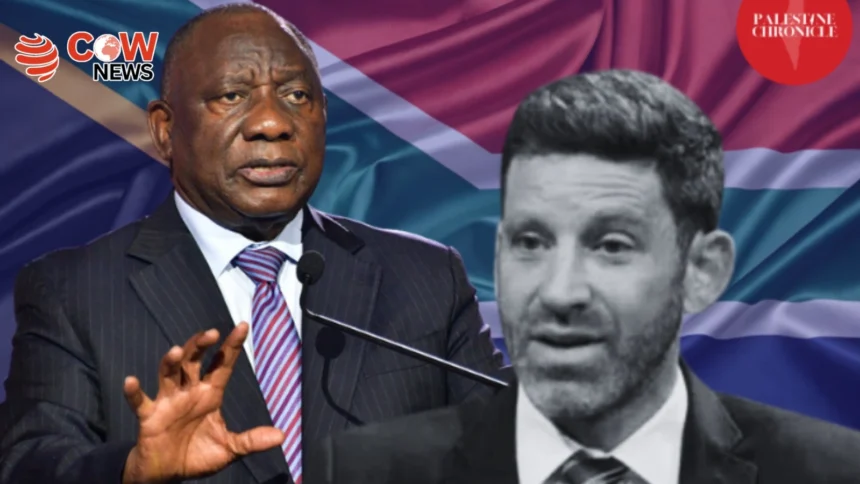
PRETORIA(The COW News Digital)South Africa has formally ordered an Israeli diplomat to leave the country within 72 hours, marking a sharp diplomatic escalation between the two nations. The South African Ministry of Foreign Affairs declared Ariel Sedman, the Chargé d’Affaires at the Israeli embassy, an “undesirable person” following alleged violations of diplomatic conduct.
Read More:
According to the ministry, Sedman engaged in actions considered inappropriate under diplomatic protocols, including what South African authorities described as an offensive social media campaign targeting the office of the South African President. These actions, the ministry said, were a clear breach of accepted diplomatic norms and prompted the decision to expel him.
The South African government emphasized that the move does not signal a break in diplomatic relations with Israel but serves as a reminder of the obligations and responsibilities diplomats must uphold while serving abroad. Officials highlighted that Israel is expected to respect international diplomatic rules and standards in future assignments.
“This decision underscores the importance of adhering to diplomatic etiquette and mutual respect between states,” the ministry said in a statement. “All diplomatic representatives are expected to maintain professional conduct in accordance with international law.”
The expulsion has drawn attention in both domestic and international media, raising questions about the potential impact on South Africa-Israel relations. Analysts suggest that while such measures are serious, they are often used as a tool to convey formal protest without fully severing ties.
South Africa has historically maintained a cautious but open relationship with Israel, balancing regional and international diplomatic interests. The latest incident reflects heightened sensitivity in Pretoria regarding perceived interference in internal political matters by foreign representatives.
Israel has yet to publicly respond to the expulsion order. However, diplomatic sources suggest that consultations between the two countries are likely to occur to manage the situation and prevent further escalation.
This development comes amid a series of regional and global tensions, emphasizing the delicate nature of diplomatic engagement and the consequences when protocols are perceived to be violated.