

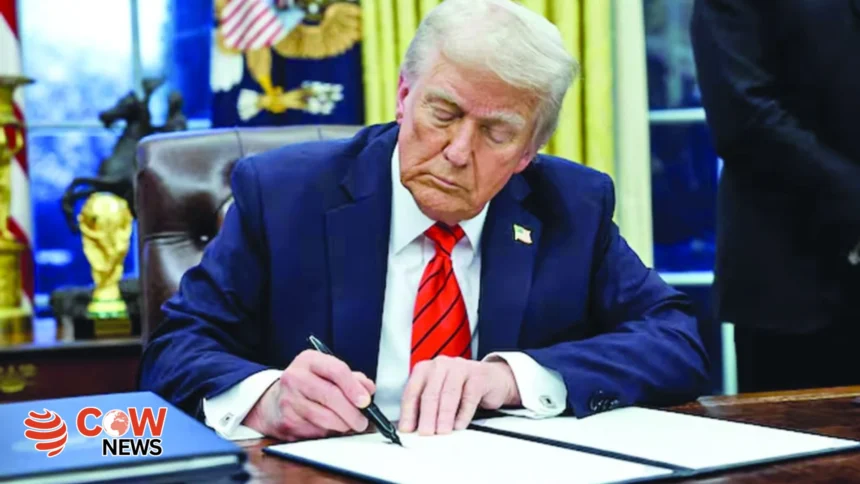
US President Donald Trump on Wednesday announced sweeping new tariffs on all foreign-made cars and light trucks, along with select auto parts, following through on a campaign pledge to support American manufacturing. The auto industry has long been a cornerstone of the US economy, providing jobs and fostering innovation. Trump’s commitment to revitalizing this sector aims to enhance competitiveness while ensuring that American-made vehicles stand strong against foreign competition.
The Impact of Tariffs on the Auto Industry
Effective April 2, the 25% tariffs will apply to imported vehicles and components such as engines, transmissions, powertrain parts, and electrical systems. This significant policy shift is expected to reshape the landscape of the auto industry, compelling manufacturers to rethink their sourcing and production strategies. Trump signed the executive order at the White House, calling the move “Liberation Day” for the US auto industry, which he believes will lead to job creation and economic growth in the manufacturing sector.
“This will continue to spur growth that you’ve never seen before,” Trump asserted during remarks from the White House. His administration estimates that the new duties could generate up to $100 billion annually, which could be reinvested in infrastructure and technology advancements within the country. Supporters of the tariffs argue that this influx could enable the US to compete more aggressively on a global scale.
Markets reacted swiftly. Shares of US-based automakers GM, Ford, Stellantis, and Tesla dipped in after-hours trading, reflecting investor uncertainty about the immediate implications of these tariffs. Earlier in the day, German-listed stocks of BMW, Porsche, Volkswagen, and Mercedes-Benz fell following a press briefing by White House press secretary Karoline Leavitt, highlighting the global impact of Trump’s decision and the interconnectedness of international automotive markets.
While the tariffs are aimed primarily at foreign manufacturers, domestic automakers are expressing concern. Companies like GM, Ford, and Stellantis, often dubbed the Big Three, also build vehicles and source parts from Canada, Mexico, and China, meaning the policy could raise production costs across the board. This situation may lead to a reevaluation of supply chains and partnerships that have been established over decades, as companies weigh the consequences of increased expenses against the benefits of domestic manufacturing.
The initial scope of the tariffs was believed to cover finished vehicles only, but an official fact sheet confirmed that key components would also be affected, further complicating supply chain logistics for carmakers. The ripple effects could be profound, potentially leading to delays in vehicle production and a rethinking of sourcing strategies. Automakers may need to establish new partnerships or invest in local production capabilities to mitigate the impact of these tariffs.
Trump defended the move as a step toward trade fairness, accusing foreign governments of exploiting US markets. “Other countries have ripped us off for decades,” he emphasized. “These tariffs are reciprocal.” This sentiment resonates with a segment of the American public that feels sidelined by globalization and seeks to protect domestic jobs, suggesting that the tariffs may serve as both a political strategy and an economic policy.
Industry analysts warn of a ripple effect on prices. Research firms estimate that the tariffs could raise the cost of non-luxury imported vehicles by $3,000 to $12,000, significantly impacting consumer decisions. This potential price increase could also alter the competitive landscape, affecting everything from sales to brand loyalty. European carmakers are weighing different responses: BMW signaled it may absorb the added costs in the short term, while Porsche said it expects to pass those costs onto consumers, reflecting varying strategies in navigating the new economic environment.
Dan Ives, an analyst at Wedbush, described the announcement as a potential “hurricane-like headwind” for both foreign and US automakers. “If they hold in their current form, these initial tariffs could push average car prices up $5,000 to $10,000 depending on the make and model,” Ives wrote Wednesday night. “This may still be part of a broader negotiation, but for now, investors will be frustrated with the lack of clarity.” These sentiments illustrate the uncertainty that grips the market as companies prepare for a new business landscape amidst evolving trade policies.
Further tariff announcements are expected on April 2.
Further tariff announcements are expected on April 2. These subsequent measures may expand beyond just vehicles and parts, potentially impacting a variety of sectors that rely heavily on international trade. As the landscape continues to shift, stakeholders across the industry—from manufacturers to consumers—are bracing for the effects of these tariffs. The ongoing discussions around trade policies underscore the importance of adaptability in a globalized economy, where the balance between protecting domestic interests and fostering international cooperation remains delicate. Industry leaders are calling for a comprehensive review of trade agreements to ensure they align with the current economic climate, advocating for policies that support growth without isolating the US from global markets.