
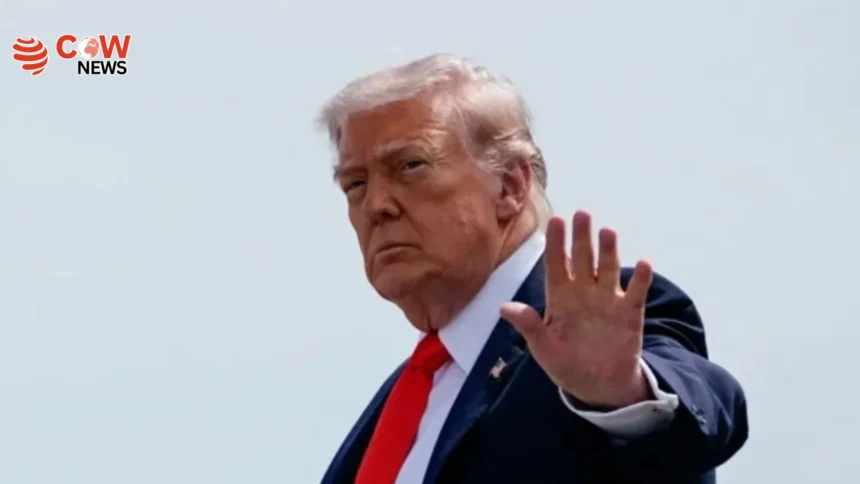
World ( The cow news digital ) US President Donald Trump has stated that a planned military strike on Iran was postponed following requests from Gulf leaders, including Saudi Arabia, the United Arab Emirates, and Qatar.
According to international reports, Trump claimed that the strike had been fully prepared and could have been launched on the same day. However, he said that discussions with regional leaders led to a temporary halt in military action to allow space for renewed diplomatic negotiations.
Trump specifically mentioned Qatar’s Emir Sheikh Tamim bin Hamad Al Thani, Saudi Crown Prince Mohammed bin Salman, and UAE President Sheikh Mohammed bin Zayed Al Nahyan, stating that they had assured him that serious talks with Iran were ongoing. He suggested that these diplomatic efforts could lead to a broader agreement acceptable to the United States and regional stakeholders.
The US president reiterated that any potential deal would require strict guarantees, particularly that Iran must not develop or possess nuclear weapons. He added that US Defense Secretary Pete Hegseth and senior military officials had been instructed to pause any immediate strike plans while diplomatic options remain open.
However, Trump also warned that if a satisfactory agreement is not reached, the United States could proceed with military action against Iran “at any time,” underscoring continued tensions between Washington and Tehran.
Reports in Western media indicate that US military planners had developed multiple operational scenarios for possible strikes on Iranian targets, with naval and air forces reportedly placed on heightened alert in the Gulf region. Some reports also suggested that Israel had been considering coordination in the event of escalation.
Analysts say Gulf countries are actively seeking to prevent a wider regional conflict, warning that direct confrontation between the United States and Iran could severely destabilize global energy markets and threaten shipping routes through the Strait of Hormuz.
The latest remarks highlight the fragile balance between military pressure and diplomatic engagement in one of the world’s most volatile geopolitical flashpoints.