
Washington(The COW News Digital)US President Donald Trump has issued fresh warnings to several Latin American countries, including Mexico, Colombia, and Cuba, following the arrest of Venezuelan President Nicolás Maduro. The remarks have intensified concerns about a more assertive US approach toward the region.
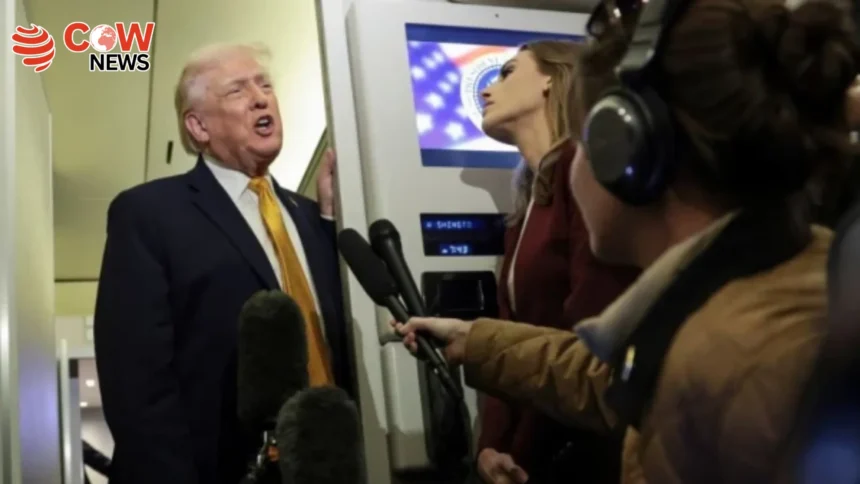
Speaking to reporters aboard Air Force One, President Trump delivered strong comments aimed particularly at Colombia. He warned Colombian President Gustavo Petro and suggested that a US military operation in Colombia could be a “good idea,” drawing immediate attention from regional observers and policymakers.
Read More:
- US Slams Palestine Recognition as Empty Symbolism
- Taliban Extend Internet Curbs, Trade Faces Major Hit
- Russia Claims Ukrainian Drones Targeted Putin’s Residence
Trump described the situation in Colombia as “bad,” accusing the country of failing to control drug production and trafficking. He claimed that the continued flow of narcotics was unacceptable and said the United States would not tolerate the situation for much longer. When asked directly about the possibility of US military action in Colombia, Trump responded that such a move would be “acceptable” to him.
The US president’s comments come amid heightened tensions following Washington’s actions in Venezuela, where US forces reportedly played a key role in the arrest of President Nicolás Maduro. That development has already sparked widespread debate about sovereignty and US interventionism in Latin America.
Trump also made pointed remarks about Cuba, saying that the Cuban government had become weak and appeared close to collapse. Although he did not outline any specific measures, his comments suggested a hardening stance toward Havana and raised speculation about increased political or economic pressure.
While Trump did not directly mention Mexico in his remarks to reporters, analysts note that his broader warnings signal a message to multiple governments in the region. Experts say the statements reflect a renewed effort to reassert US dominance in Latin America, particularly through tough rhetoric and the threat of force.
Political analysts and regional experts argue that Trump’s language represents a shift toward a more confrontational US foreign policy in the Western Hemisphere. They warn that such statements could increase instability and provoke strong reactions from Latin American governments, many of which have historically opposed US military involvement in their internal affairs.
So far, there has been no official response from Colombia or Cuba to Trump’s latest comments. However, diplomatic sources suggest that the remarks are likely to trigger concern among regional leaders and could prompt discussions within regional blocs and international forums.
As tensions rise, observers say the coming days will be critical in determining whether Trump’s statements translate into concrete policy actions or remain part of a broader strategy of pressure and deterrence in Latin America.