World ( The cow news digital ) Thousands of residents across southeastern England have faced severe water supply disruptions as a record-breaking heatwave and prolonged dry weather continue to strain the country’s aging infrastructure. The situation has raised concerns about the resilience of Britain’s water networks amid increasingly frequent extreme weather events linked to climate change.
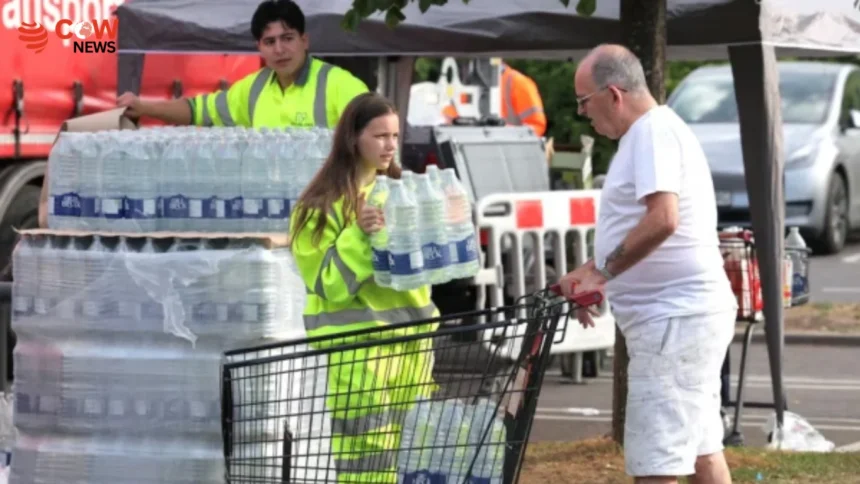
More than 20,000 households experienced either a complete loss of water supply or significantly reduced water pressure during the recent surge in temperatures. The coastal town of Whitstable was among the hardest-hit areas, with approximately 8,000 residents affected by the shortages. Many families were forced to rely on emergency water distribution points, where long queues formed as authorities worked to restore normal services.
Officials from South East Water, one of the region’s major water providers, said the exceptional demand created by the heatwave placed unprecedented pressure on the supply system. The company deployed emergency response teams and distributed bottled water to vulnerable residents while engineers worked to address network issues.
According to environmental experts, the crisis has been intensified by an unusually dry spring. Rainfall levels during March and April were significantly below seasonal averages, reducing water reserves and placing additional stress on local supplies. As temperatures climbed, water consumption surged, further stretching already limited resources.
The shortages have also renewed scrutiny of Britain’s water infrastructure. Critics argue that years of underinvestment have left parts of the network ill-equipped to handle growing demand and extreme weather conditions. Aging pipes and distribution systems remain vulnerable to breakdowns during periods of peak usage, increasing the risk of widespread service disruptions.
Local businesses and tourism operators have also felt the impact. With visitor numbers rising during school holidays and warm-weather weekends, popular coastal destinations have seen demand for water increase sharply. Community leaders have urged authorities and utility companies to develop long-term solutions to prevent similar incidents in the future.
READ MORE
- Pakistan, Taliban, and Afghanistan: The Complex Triangle of Influence
- Imran Khan and the Politics of Idolization
The UK Environment Agency has warned that changing weather patterns could make water shortages more common in coming years. Experts are calling for greater investment in infrastructure upgrades, improved water conservation measures, and enhanced planning to ensure reliable supplies during future heatwaves.
As temperatures remain high, residents are being encouraged to use water responsibly while utility providers continue efforts to stabilize the network and restore confidence in the region’s water supply system.