
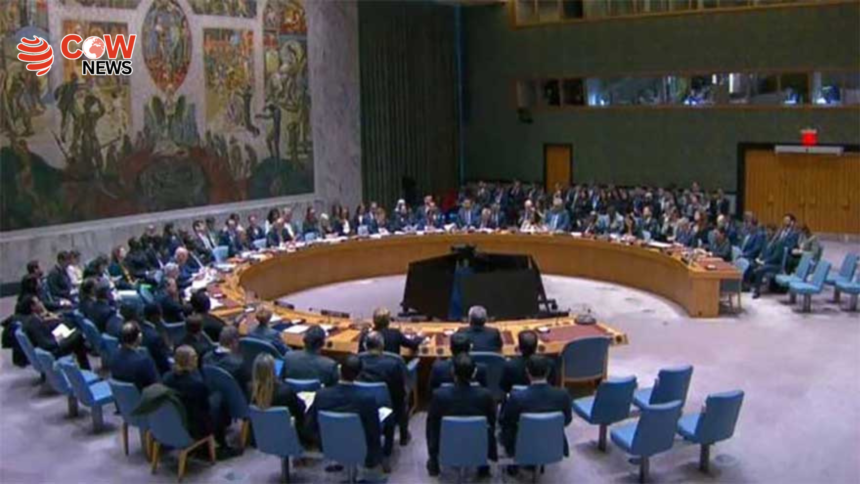
UN Secretary-General Antonio Guterres told an emergency meeting of the UN Security Council on the Iran conflict on Saturday that he deeply regretted that an opportunity for diplomacy had been “squandered.”
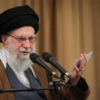
He also told the 15-member body he was not in a position to confirm Israeli reports of the death of Iran’s Supreme Leader Ali Khamenei.
Read More:
The UN boss said this as the UNSC panel began its emergency meeting in the wake of US-Israel attacks on Iran, which Iran has responded to with strikes in countries across the region.
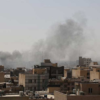
“Military action carries the risk of igniting a chain of events that no one can control in the most volatile region of the world,” UN Secretary General Guterres said, adding that about 20 cities had been hit in Iran.
He noted reports of Iranian leaders being killed, but said he could not independently confirm.
“Military action carries the risk of igniting a chain of events that no one can control in the most volatile region of the world,” he said.
“I call for de-escalation and an immediate cessation of hostilities. The alternative is a potential wider conflict with grave consequences for civilians and regional stability. I strongly urge all parties to return immediately to the negotiating table,” he said.
US, ISRAEL DEFEND STRIKES
According to AFP, the United States and Israel on Saturday defended their attacks on Iran, which called resulting civilian deaths a “war crime” during an emergency meeting of the UN Security Council.
“The international community has long affirmed a simple and necessary principle: Iran cannot have a nuclear weapon,” said US ambassador Mike Waltz, pointing to past UN resolutions ignored by Tehran.
“That principle is not a matter of politics, it’s a matter of global security, and to that end, the United States is taking lawful actions,” he added.
Referencing Iran’s recent deadly crackdowns on protesters, Waltz said that Iran’s presence at Saturday’s emergency meeting in New York “makes a mockery of this body.”
“But where the UN lacks moral clarity, the United States of America will maintain it,” he added.
Israeli ambassador Danny Danon condemned the “hypocrisy” of some Security Council members who criticized the joint US-Israeli attack, but not the retaliation by Iran.
“We did not act of impulse. We did not act of aggression. We acted out of necessity because the Iranian regime left no reasonable alternative,” Danon said.
Iranian counterpart Amir Saeid Iravani denounced the “war crime” of civilian deaths, notably of more than 100 children at Minab School in southern Iran.
“It is regrettable that some members of this body, in a blatant double standard, disregard the flagrant act of aggression committed by the US and Israel on Iran, and condemn Iran for using its inherent right to self-defense in the UN Charter,” he said.
Iravani notably did not comment on or confirm the death of Supreme Leader Ayatollah Ali Khamenei, which US President Donald Trump announced moments before the meeting.
The mixed views highlighted a divided Security Council.
Russia and China only condemned the US-Israeli strikes, while others principally targeted Iran. Some were more careful to simply call for deescalation.
Gulf states condemned Iran’s strikes against them as “cowardly” in a joint statement read by Bahrain’s ambassador.
“We hold the government of Iran fully responsible for these attacks, and we reject any justifications or explanations to justify this hostile behavior or to manipulate rules of international law,” said Jamal Fares Alrowaiei on behalf of Saudi Arabia, the United Arab Emirates, Kuwait, Oman, Qatar, Bahrain, Syria and Jordan.
UN Secretary-General Antonio Guterres warned that military action in the Middle East risked triggering uncontrollable consequences in the region.
“Military action carries the risk of igniting a chain of events that no one can control in the most volatile region of the world,” he told the Security Council