
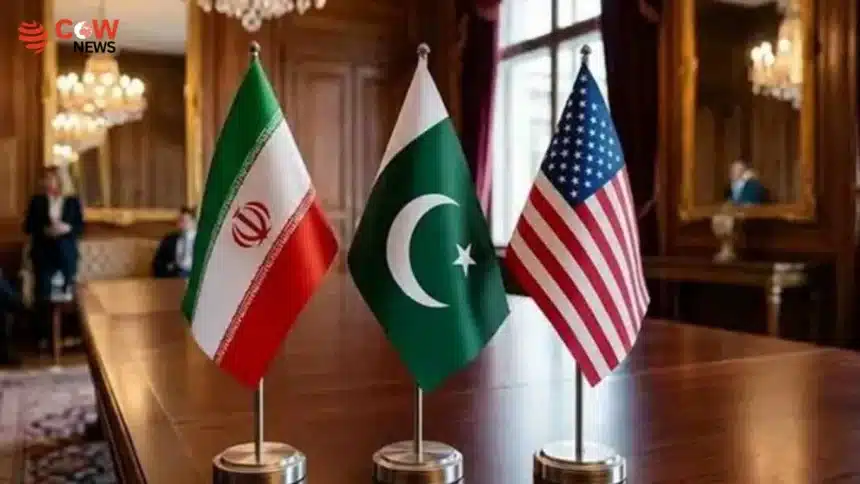
World ( The cow news digital ) Negotiations between the United States and Iran are scheduled to begin today in the Swiss town of Brunnenstock following the signing of a memorandum of understanding in Islamabad, according to official and diplomatic sources.
The Swiss Ministry of Foreign Affairs confirmed that representatives from both Washington and Tehran will meet in Brunnenstock to discuss the implementation of the agreement reached earlier this week. The talks are expected to focus on practical steps for carrying forward the commitments outlined in the memorandum, though detailed agendas have not been publicly disclosed.
Pakistan and Qatar are expected to play a facilitating role in the discussions, with their representatives present as mediators during the proceedings. Their involvement is seen as part of broader international efforts to support dialogue and reduce tensions between the two long-standing adversaries.
However, uncertainty remains regarding the exact composition of the delegations from both the United States and Iran. Officials have not confirmed which senior figures or technical experts will participate in the discussions, and the nature of the meeting—whether political, technical, or exploratory—has not been clarified.
The Swiss government has maintained a cautious stance, offering limited information about the meeting and withholding further details on the agenda or expected outcomes. In its brief statement, Bern emphasized only that it is providing a neutral venue for dialogue between the parties involved.
The development follows the signing of a memorandum of understanding in Islamabad a day earlier. According to statements issued from the Prime Minister’s Office, U.S. President Donald Trump and Iranian President Masoud Pezeshkian were among the signatories of the document, which outlines a framework for continued diplomatic engagement.
Pakistan’s Prime Minister Shehbaz Sharif also endorsed the agreement, signing in his capacity as a facilitator. Islamabad has described the initiative as a step toward reducing regional tensions and encouraging diplomatic solutions to long-standing disputes.
While the announcement has drawn international attention, analysts note that many details remain unclear, including the scope of the agreement and the likelihood of substantive breakthroughs in the upcoming talks. Observers will be closely watching the Swiss meeting for signals of progress or further diplomatic stalemate.
For now, the Brunnenstock meeting marks a rare instance of direct engagement under a third-party facilitated framework, with hopes that continued dialogue may open pathways toward de-escalation.