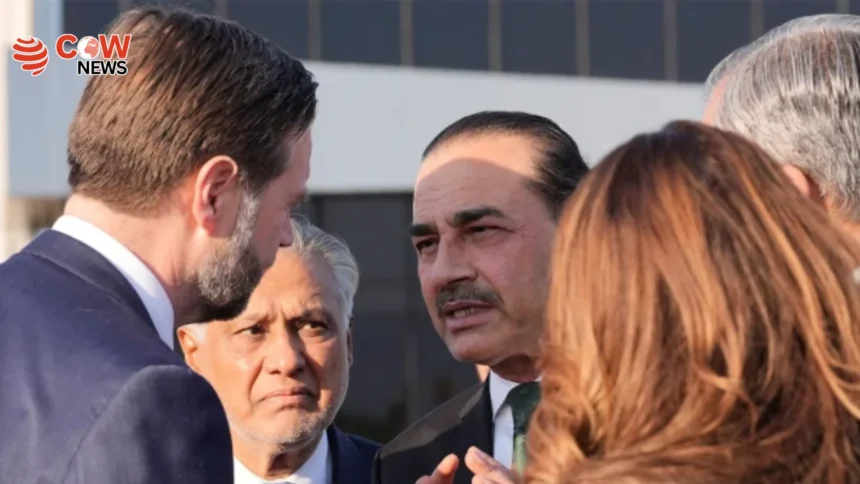
World ( The cow news digital ) US media outlets have reported that Pakistan’s Chief of Army Staff, Field Marshal Syed Asim Munir, played a significant role in diplomatic efforts aimed at reducing tensions between the United States and Iran and advancing a draft framework for a potential agreement.
According to The Washington Post, Field Marshal Asim Munir maintained continuous engagement with key stakeholders, including officials from the United States, Iran, and several Gulf countries. The report claims that his efforts contributed to improving communication channels and building trust between the involved parties during a sensitive phase of negotiations.
The newspaper further stated that his recent visit to Iran was viewed as an important diplomatic development, which reportedly helped accelerate discussions around the draft agreement. It added that the visit created momentum that supported progress toward a preliminary understanding between the sides.
Other US publications, including The Washington Times, reported that significant movement was observed on the draft agreement during the period of intensified diplomatic activity. The reports suggest that negotiations gained traction while Asim Munir was in Iran, contributing to what some analysts described as a rare window of diplomatic opportunity.
The New York Times also characterized Pakistan’s involvement as high-level diplomacy, noting that Islamabad’s role helped facilitate dialogue between Washington and Tehran. The report highlighted the use of backchannel communication mechanisms to prevent escalation and encourage continued negotiations.
US Secretary of State Marco Rubio has previously acknowledged ongoing contact with Pakistan’s military leadership, stating that such communication was part of broader efforts to manage regional tensions. He also indicated that a senior Pakistani figure was expected to play a role in engagement with Iranian counterparts.
Following the reported completion of Field Marshal Asim Munir’s visit to Iran, international media suggested that diplomatic activity intensified further, with additional coordination among regional and global stakeholders. Observers noted that such developments coincided with increased attention from Washington on the evolving situation.
Reports also indicated that the US administration convened high-level internal discussions, with President Donald Trump reportedly engaging with his national security team and coordinating calls with leaders from several countries, including Pakistan, Saudi Arabia, Qatar, the United Arab Emirates, Türkiye, and Egypt.
Analysts caution that while media reports suggest progress, no formal confirmation of a finalized US–Iran agreement has been issued by either government. The situation remains fluid, with diplomatic negotiations continuing behind the scenes.