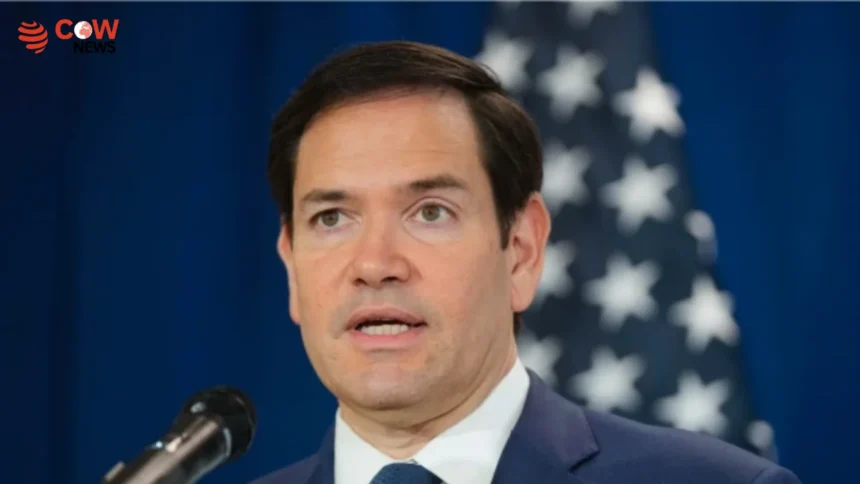
World ( The cow news digital ) US Secretary of State Marco Rubio has stated that a potential agreement with Iran could take a few more days to finalize, as negotiations continue alongside reports of renewed military activity in the region.
Speaking to journalists in Jaipur, India, Rubio said that discussions with Iranian officials are ongoing in Doha, Qatar, where both sides are working on the language and key provisions of an initial draft framework. He emphasized that while progress is being made, several issues still require detailed negotiation before any final agreement can be reached.
Rubio noted that the United States remains committed to reaching a deal, but only if it aligns with American national interests. He also stressed the strategic importance of keeping the Strait of Hormuz open, calling it vital for global trade and energy transportation.
At the same time, US Central Command (CENTCOM) has claimed that American forces conducted strikes in southern Iran, targeting alleged missile launch sites and vessels involved in laying naval mines. US officials stated that the operations were carried out to protect American personnel and prevent potential threats in the region.
According to CENTCOM, the targeted locations were believed to be linked to efforts to deploy mines in the Strait of Hormuz, a critical maritime route for global oil shipments.
Iranian state media reported explosions near the coastal city of Bandar Abbas but did not immediately confirm or deny the extent of damage or casualties. Iranian authorities have also not officially responded to US claims regarding the strikes.
Meanwhile, a new round of talks is underway in Doha involving Iranian negotiators and international stakeholders. The discussions reportedly focus on key issues such as the security of the Strait of Hormuz, extension of ceasefire arrangements, Iran’s enriched uranium stockpiles, and the potential release of frozen Iranian assets.
Iranian Foreign Ministry spokesperson Esmaeil Baghaei stated that detailed nuclear negotiations will not proceed unless an initial framework agreement is reached first, highlighting ongoing disagreements over procedural and technical terms.
Read more
- Imran Khan and the Politics of Idolization
- Pakistan, Taliban, and Afghanistan: The Complex Triangle of Influence
The developments come amid heightened tensions between Washington and Tehran, with global oil markets and regional stability increasingly affected by uncertainty surrounding both diplomatic talks and military activity.
International observers continue to call for restraint, warning that further escalation could have significant implications for global energy supplies and maritime security.