

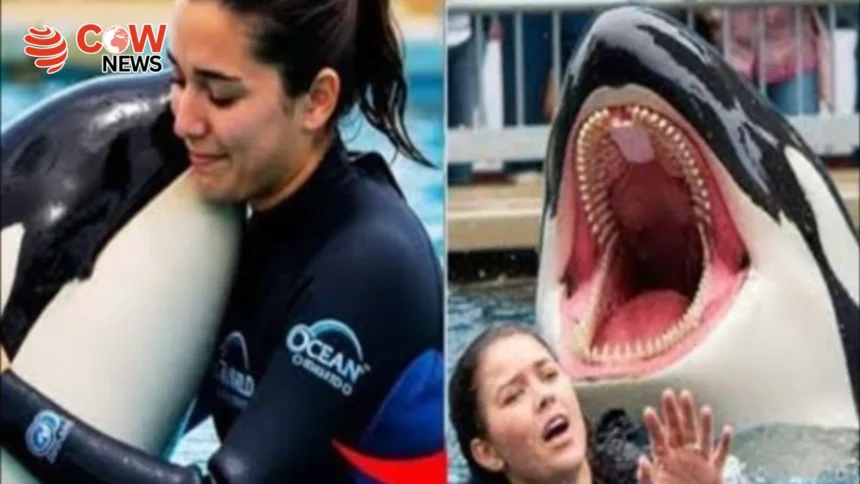
Peshawar( The COW News Digital) A shocking video circulating on Instagram, TikTok, and X (formerly Twitter) claimed to show a whale trainer, identified as Jessica Radcliffe, being swallowed alive by her own killer whale during a live performance. The disturbing footage, which appeared to capture the trainer losing her balance, falling into the water, and then being devoured by the massive orca, quickly went viral, sparking horror and sympathy worldwide.
Millions of users shared the clip, many expressing outrage over marine life performances and sympathy for the so-called trainer. However, the truth behind the viral video has now been revealed, and it is far from reality.
Multiple international media outlets have confirmed that the video is completely fake, generated using artificial intelligence (AI) tools to create hyper-realistic but fabricated scenes. Experts in digital forensics noted inconsistencies in the background, water patterns, and animation quality, which gave away the AI-generated nature of the clip.
Further investigation revealed that neither the location shown in the video nor the alleged trainer, Jessica Radcliffe, actually exists. Marine institutions and aquatic parks across North America and Europe confirmed that no such incident occurred, nor is there any record of a trainer by that name.
The fabricated video is an example of how quickly AI-generated misinformation can spread across social media, blurring the line between reality and fiction. While the clip captivated millions, fact-checkers warn that such content not only misleads the public but also creates unnecessary panic and tarnishes reputations of legitimate organizations.
This is not the first time AI-generated videos have gone viral, but the lifelike quality of this particular clip raised serious concerns. Analysts suggest that without proper AI content regulation, the spread of fabricated news and visuals could escalate, undermining trust in genuine reporting and creating dangerous misinformation trends.
Digital safety experts are urging users to verify content through trusted sources before sharing, while platforms like TikTok, Instagram, and X are under pressure to improve misinformation detection systems.
The viral whale trainer video may have been fake, but it has sparked real conversations about AI ethics, online responsibility, and the urgent need for digital literacy in the age of deepfakes.