
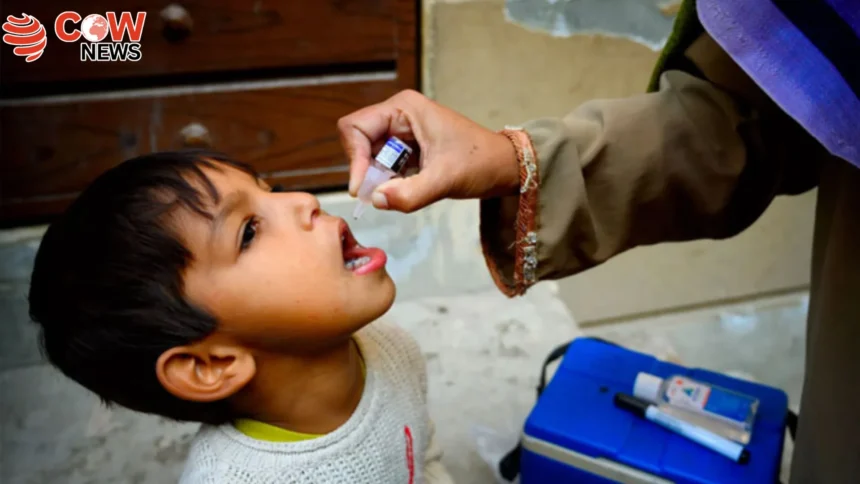
Karachi ( The COW News Digital) During the latest polio vaccination campaign in Sindh, over 35,000 parents refused to vaccinate their children, with 34,000 of them residing in Karachi. The provincial health authorities expressed concern over the growing trend of vaccine hesitancy in the city.
According to sources from the Sindh Health Department, the recent campaign, which ran from September 1 to 7, aimed to administer polio drops to approximately 2.1 million children across Karachi. However, a significant number of parents, particularly in the eastern district, denied vaccination for their children. In the Eastern District alone, more than 8,000 parents reportedly refused to have their children immunized against polio.
Health officials noted that vaccine refusal remains a major obstacle to polio eradication efforts in Pakistan, which is one of the few countries globally where the disease is still endemic. The Ministry of Health emphasized that such refusals not only put unvaccinated children at risk but also threaten herd immunity, potentially allowing the poliovirus to spread within communities.
The refusal cases have prompted the authorities to intensify awareness campaigns highlighting the safety and importance of polio vaccines. Officials are reaching out to communities, engaging local religious and community leaders, and distributing educational material to address misconceptions surrounding the vaccine.
Karachi, being Pakistan’s largest city, presents unique challenges in public health initiatives due to its dense population, diverse communities, and socio-economic disparities. Health experts stress that targeted community engagement and repeated vaccination rounds are critical to ensure every child receives protection against polio.
Sindh’s health authorities have reiterated their commitment to eradicating polio and urged parents to cooperate with vaccination teams. They warned that refusal not only endangers individual children but could also undermine the province’s ongoing public health campaigns and international efforts to eliminate polio.
The provincial government continues to monitor areas with high refusal rates and plans additional interventions to ensure maximum coverage. Meanwhile, the polio vaccination teams remain active across Karachi, carrying out door-to-door campaigns to reach children who missed earlier rounds.
Authorities have called upon civil society, local influencers, and media to help dispel myths and educate the public about the lifelong benefits of polio immunization.