

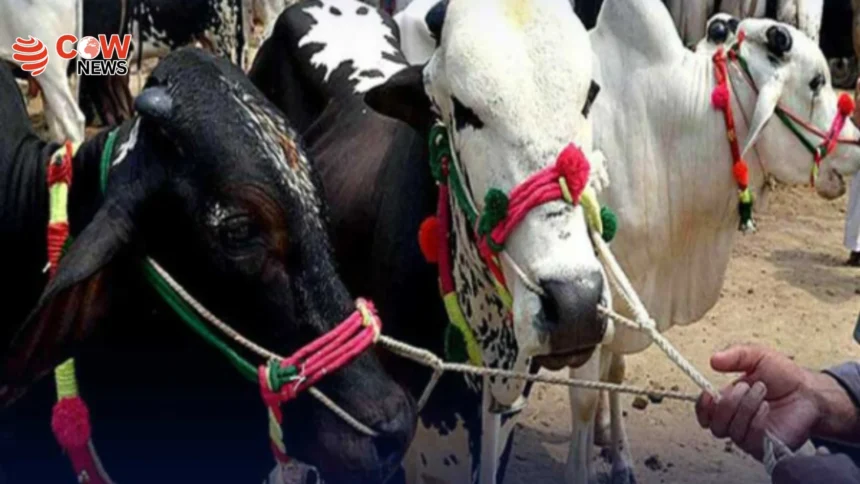
National ( The cow news digital ) As Eid-ul-Adha approaches, livestock markets across Pakistan are witnessing a surge in visitors purchasing animals for sacrifice. However, rising temperatures and ongoing heatwave conditions have increased concerns among veterinary experts, who warn that proper animal care is now more important than ever.
According to animal health specialists, sacrificial animals brought home from crowded livestock markets often experience stress due to long-distance travel, unfamiliar surroundings, loud noises, and excessive human interaction. Experts say that children gathering around animals or unnecessary handling can further increase anxiety and discomfort in livestock.
Veterinary professionals advise owners not to bathe newly purchased animals immediately after bringing them home. They explain that animals already exposed to extreme heat and travel fatigue may suffer physical shock or illness if suddenly washed with water before their body temperature stabilizes. Instead, animals should first be placed in a calm and shaded environment to recover from stress.
Experts also recommend feeding animals in moderate quantities during morning and evening hours rather than offering excessive food at once. Clean drinking water should be provided regularly, but extremely cold or ice-filled water should be avoided during severe heat, as it may affect the animal’s digestive system.
During heatwave conditions, livestock should be kept in cool, ventilated, and shaded areas to reduce the risk of heatstroke. Symptoms such as rapid breathing, excessive panting, weakness, or restlessness may indicate dehydration or heat-related stress. In such situations, veterinary experts suggest providing ORS, glucose, or electrolyte solutions to help restore fluids and essential salts in the animal’s body.
Specialists further explained that rehydration is the first and most critical step in treating heatstroke in animals. Once the body regains sufficient fluids, medications and other treatments become more effective. In severe cases, physical rehabilitation or supportive veterinary care may also be required.
Animal care experts additionally emphasize the importance of maintaining cleanliness around the animal’s shelter and ensuring proper airflow to minimize exposure to insects and harmful environmental conditions. Owners are advised not to tie animals under direct sunlight, particularly during peak afternoon temperatures.
Experts say sacrificial animals should not only be viewed as part of a religious obligation but also as a responsibility that requires proper care, protection, and compassion. Adequate attention to their health and comfort can help keep them safe and healthy until Eid-ul-Adha.