
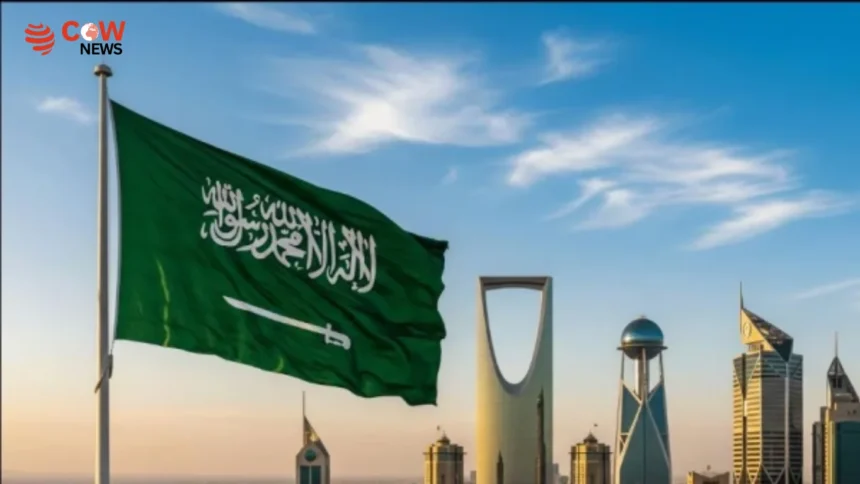
World ( The cow news digital ) Recent media reports and international analyses indicate the possible emergence of a new Saudi Arabia–led regional cooperation framework involving several key Muslim-majority countries, including Pakistan, Türkiye, Qatar, and Egypt. The development, if confirmed, could signal a significant shift in the geopolitical and security landscape of the Middle East and South Asia.
According to a report referenced by international publications, particularly Foreign Policy, the proposal is said to have gained momentum following a period of heightened regional tensions, including recent conflict involving Iran. The aftermath of these hostilities reportedly left several Gulf Cooperation Council (GCC) states facing economic disruption, weakened trade flows, and renewed security concerns across critical shipping and energy corridors.
Analysts suggest that the envisioned grouping would extend beyond the traditional GCC structure, aiming to establish a broader strategic alliance focused on collective security, economic resilience, and political coordination. Saudi Arabia is described as taking a leading role in facilitating dialogue among participating states, with Pakistan, Türkiye, Qatar, and Egypt positioned as potential key partners due to their regional influence and military capabilities.
Some regional media outlets have labeled the proposed framework an “Islamic NATO,” though no official confirmation or endorsement of this terminology has been issued by any of the countries reportedly involved. Diplomatic sources emphasize that discussions remain at an exploratory stage, and no formal institutional structure has yet been announced.
Notably, reports also highlight that the United Arab Emirates appears to be absent from the emerging alignment, a factor that analysts interpret as reflecting evolving strategic preferences and differing regional priorities among Gulf states.
Read more
- Pakistan, Taliban, and Afghanistan: The Complex Triangle of Influence
- Imran Khan and the Politics of Idolization
If such a bloc were to materialize, experts believe it could reshape defense cooperation mechanisms, intelligence sharing, and economic partnerships across a wide geography stretching from North Africa to South Asia. However, observers caution that the initiative remains speculative, and its future will depend on formal diplomatic agreements and political consensus among the involved governments.
For now, the development is being closely monitored by international policy circles as part of broader realignments in a region already undergoing rapid strategic transformation.