
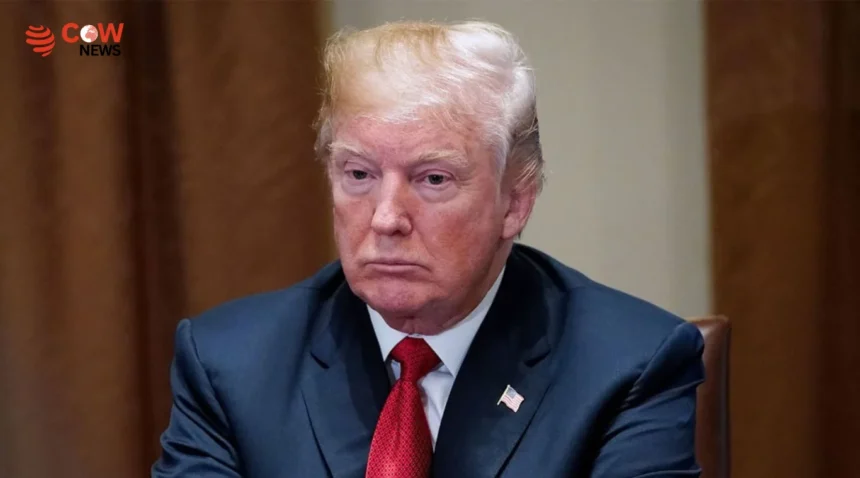
Washington (The COW News Digital) US President Donald Trump has suggested that Washington may have gone too far in targeting Iran’s leadership, acknowledging potential difficulties in identifying Iranian officials with whom the United States could negotiate an end to the conflict.
According to a report by Al Jazeera, Trump’s remarks come amid continued tensions between Washington and Tehran, with diplomatic efforts aimed at exploring a possible path towards ending the hostilities.
The president’s comments indicate that efforts to target Iran’s senior leadership may have created additional complications for US diplomatic engagement, particularly when it comes to determining which Iranian officials could represent Tehran in potential negotiations.
Trump reportedly expressed concern over the difficulty of identifying Iranian counterparts with whom Washington could communicate about ending the war. His remarks have drawn attention to the possible consequences of military operations against the country’s leadership for future diplomatic contacts.
However, the available report did not provide further details about which Iranian officials the US administration hopes to engage, nor did it outline any specific changes to Washington’s military strategy.
It also remains unclear whether Trump’s comments signal a shift in the administration’s approach towards Iran or reflect concerns about the practical challenges of pursuing negotiations during an ongoing conflict.
Relations between the United States and Iran have been marked by longstanding disagreements over regional security, Iran’s nuclear programme and American military and economic pressure on Tehran.
The latest remarks highlight a central challenge in conflicts involving political and military leadership: military operations intended to weaken an adversary can also complicate efforts to establish communication channels and identify representatives capable of negotiating agreements.
For Washington, finding suitable Iranian counterparts could prove important if diplomatic efforts are to gain momentum. Any negotiations would depend on the willingness of both sides to engage and the ability of their representatives to communicate on key issues, including a possible ceasefire and the broader terms for ending hostilities.
Nevertheless, Trump’s reported statement does not, by itself, confirm that the United States has adopted a new policy or decided to end its military campaign.
The comments should therefore be understood as an indication of possible difficulties facing US diplomacy rather than confirmation of an imminent agreement with Iran.
The immediate implications of Trump’s remarks remain uncertain. Further statements from the White House and Iranian officials may clarify whether discussions are underway and whether either side is prepared to pursue a negotiated settlement.
For now, the situation reflects the complicated relationship between military pressure and diplomatic engagement as Washington and Tehran confront continued tensions.
Any meaningful breakthrough would likely require clearer communication between the two governments, agreement on the scope of negotiations and concrete steps towards reducing hostilities.