

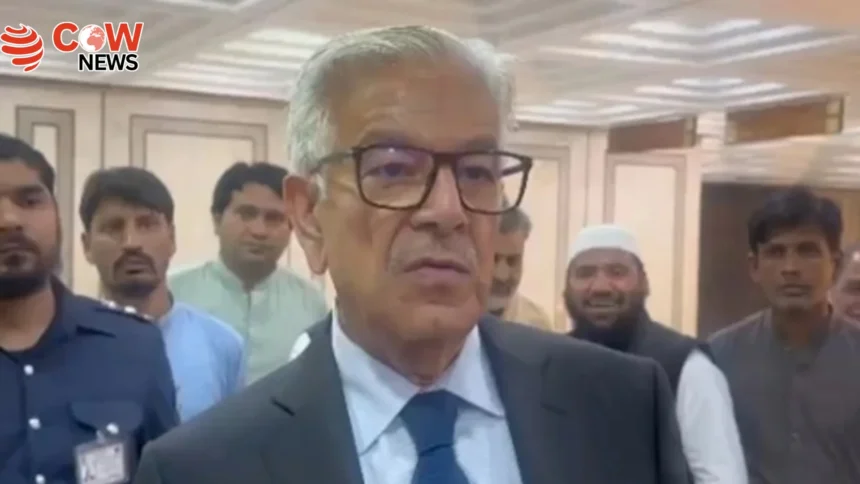
Islamabad (The COW News Digital)Federal Defense Minister Khawaja Asif has sparked controversy after calling for the shoot-on-sight punishment for individuals caught stealing manhole covers, following a viral video showing the theft. The minister shared his comments on social media platform X, expressing anger over the act and describing the thieves as “killers of innocent children.”
In his post, Asif wrote, “If there is video evidence of these people, bring them to the scene of the crime and shoot them. These are killers of innocent children. If no action is taken after this video, the system itself becomes an accomplice to the murder of these children.”
Read More:
- US Slams Palestine Recognition as Empty Symbolism
- Trump Threatens Kabul Over Bagram Airbase Control
- Asia Cup 2025 Super Four Tickets at Shocking Prices
The remarks came in response to a tragic incident in Karachi, where a three-year-old child, Ibrahim, went missing after falling into an open manhole near Nipa Chowrangi. His body was later recovered by a child scavenger after 15 hours. The incident had already prompted public outrage over city safety and infrastructure negligence.
Following the tragedy, Karachi’s Mayor issued a public apology and administrative actions were taken, including the transfer of eight officials from the Karachi Metropolitan Corporation (KMC), Water Board, and related departments. The city administration vowed to treat the case as an example to prevent similar incidents.
Asif’s comments, however, have drawn criticism from legal experts and human rights advocates, who argue that advocating extrajudicial measures undermines the rule of law. They emphasize that such matters should be addressed through proper policing, surveillance, and judicial procedures rather than violent retaliation.
The theft of manhole covers is not uncommon in Pakistan and has been linked to accidents, injuries, and deaths, particularly affecting children and pedestrians. Municipal authorities have repeatedly warned about the dangers of stolen or missing covers but often face challenges in enforcement due to systemic inefficiencies and lack of accountability.
While Asif’s statements reflect frustration with ongoing civic issues, critics caution that resorting to violent punishment could escalate law-and-order problems rather than resolving them. The debate highlights broader concerns over public safety, municipal accountability, and the balance between enforcement and legal procedures in urban governance.