
London (The COW News Digital) The growing shortage of air traffic controllers is creating challenges for the aviation industry, as experienced professionals approach retirement and recruitment efforts intensify across several countries.
The global aviation industry is facing an important workforce challenge as demand for qualified air traffic controllers continues to grow. These professionals play a critical role in maintaining safe aircraft movements, coordinating flights and preventing potentially dangerous situations in increasingly busy airspace.
A recent industry report has warned that the world could face a shortage of approximately 71,000 air traffic controllers by 2034. The projected shortfall has raised concerns about the ability of aviation authorities and airport operators to maintain sufficient staffing levels as air travel expands.
The United Kingdom is also facing pressure to recruit new professionals. Industry estimates suggest that approximately one-third of the country’s existing air traffic controllers are expected to leave the profession by the end of the decade.
In response to these concerns, National Air Traffic Services (NATS), the UK’s national air traffic control provider, has launched a recruitment initiative aimed at bringing 140 trainee controllers into the profession.
The recruitment drive highlights the growing need to attract new talent into a highly specialised career that requires concentration, strong communication skills, quick decision-making and the ability to remain calm in demanding situations.
Despite the challenges, air traffic control offers attractive financial opportunities. Trainees recruited by NATS can earn approximately £34,000 during training, with salaries rising to around £55,000 after qualification. Experienced professionals can earn more than £100,000, depending on their position and responsibilities.
Another important feature of the profession is that candidates do not necessarily need a university degree to enter the field. Instead, recruitment programmes focus on identifying individuals with the right abilities, aptitude and potential to complete demanding technical training.
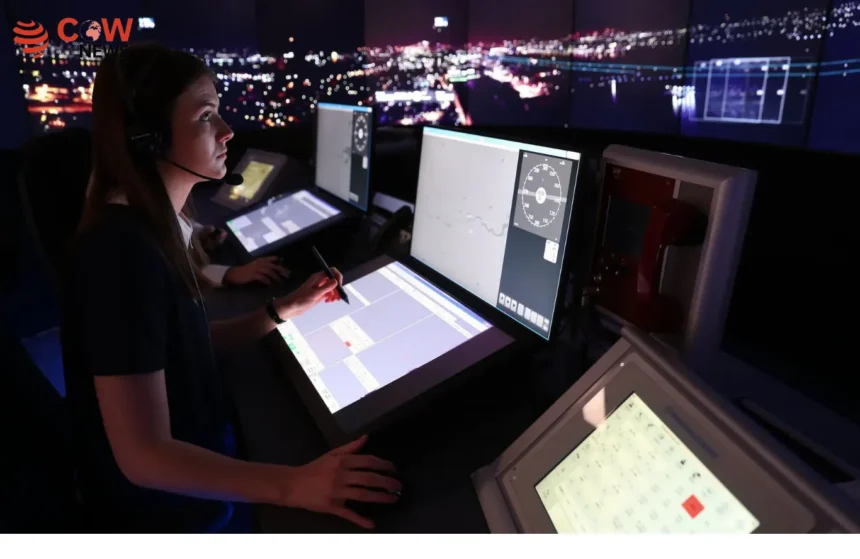
Air traffic controllers are responsible for coordinating aircraft movements and ensuring that planes maintain appropriate separation while operating within controlled airspace.
Their responsibilities extend beyond giving pilots permission to take off or land. Controllers continuously monitor aircraft positions, speeds, directions and altitudes to ensure that flights can operate safely and efficiently.
They also coordinate with pilots, airport ground operations, neighbouring control centres and other aviation professionals.
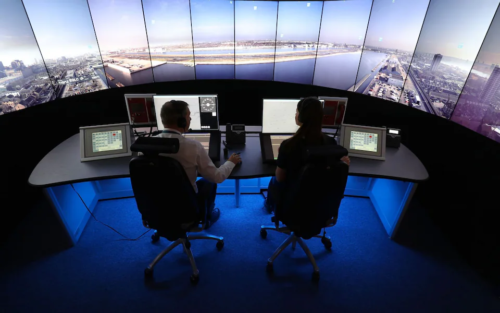
The job requires continuous awareness of changing conditions. A controller may be responsible for several aircraft approaching an airport, another aircraft preparing for departure and additional flights passing through the surrounding airspace.
At the same time, weather conditions can change, aircraft may experience technical problems and emergency requests can arise unexpectedly.
Controllers must consider all these factors before issuing instructions.
According to former aviation professionals, the role can be compared to playing chess in three dimensions. However, unlike a traditional chess game, aircraft are constantly moving, decisions must be made within strict time limits and the consequences of an incorrect decision can be extremely serious.
One of the most important aspects of air traffic control is maintaining a clear understanding of what is happening across a particular section of airspace.
Aircraft cannot simply stop in the sky when another plane approaches. Controllers must therefore manage their movements carefully and ensure that established separation standards are maintained.
Depending on the circumstances and applicable procedures, aircraft operating in the air may need to maintain several nautical miles of horizontal separation. Requirements can vary according to altitude, surveillance systems, airspace classification and the type of operation.
During the approach and landing phases, controllers must also coordinate aircraft movements to prevent conflicts and maintain an orderly arrival sequence.
A controller’s responsibility includes assessing the speed, altitude, direction and distance of each aircraft before deciding which instructions should be issued.
Pilots may receive information about surrounding aircraft through onboard systems, but air traffic controllers are responsible for organising the overall sequence of movements within their assigned airspace.
This becomes particularly challenging when several aircraft are approaching an airport simultaneously.
A controller must anticipate possible conflicts before they develop rather than waiting until aircraft are already too close to one another.
Such responsibilities make concentration, spatial awareness and forward planning essential qualities for anyone considering this career.
Air traffic control is not simply a technical profession. It requires a combination of mental abilities, communication skills and personal characteristics that allow individuals to make accurate decisions under pressure.
Experienced professionals identify several important qualities that help determine whether someone is suitable for the role.
1. Strong Spatial Awareness
Controllers must understand the positions of multiple aircraft in three-dimensional space.
They need to visualise how aircraft are moving and predict where they will be within the next few minutes.
This ability helps them identify potential conflicts and provide instructions that maintain safe distances.
2. Quick Decision-Making
Air traffic situations can change rapidly. Controllers must process information and make decisions without unnecessary delays.
They need to identify the most important issues, establish priorities and communicate instructions clearly.
3. Ability to Remain Calm Under Pressure
The profession involves safety-critical decisions, meaning that controllers must maintain concentration even when unexpected situations occur.
Remaining calm allows them to assess information objectively and follow established procedures.
4. Excellent Communication Skills
Clear communication is essential because controllers interact with pilots and other aviation professionals throughout their shifts.
Instructions must be accurate, concise and easily understood.
A misunderstanding or unclear message could create unnecessary risks, which is why aviation communication follows internationally recognised standards.
5. Multitasking and Information Processing
Controllers regularly receive information from radar systems, communication equipment, flight data displays and other operational sources.
They must process these inputs while maintaining awareness of aircraft movements and ongoing instructions.
6. Teamwork and Coordination
Air traffic control is not an individual responsibility.
Different controllers manage separate sectors of airspace and must coordinate with one another when aircraft move between their areas of responsibility.
Effective teamwork ensures that important information is transferred accurately and without unnecessary delays.
Is Air Traffic Control a Stressful Career?
Air traffic control is widely recognised as a demanding profession because decisions can directly affect the safety of passengers and flight crews.
However, experienced controllers distinguish between working under pressure and experiencing uncontrolled stress.
Professional training, standard operating procedures and structured working arrangements are designed to help controllers manage demanding situations.
Controllers generally work within carefully organised shift systems that include scheduled breaks to protect concentration and reduce fatigue.
In some operational environments, breaks may be arranged at regular intervals, including approximately 30 minutes after two hours of active duty, although exact arrangements depend on the organisation and operational requirements.
The objective is to ensure that professionals remain mentally alert throughout their working periods.
Training also prepares controllers to deal with unexpected situations, including communication failures, aircraft technical problems and emergency landings.
For example, a pilot may report a problem with the landing gear, experience a radio communication failure or request immediate assistance because of a technical issue.
In such circumstances, controllers must coordinate with relevant airport services and emergency response teams.
They may need to arrange priority landing clearance, keep other aircraft away from the affected runway and ensure that emergency services are ready to respond.
These situations demonstrate why the profession requires both technical knowledge and the ability to make decisions under pressure.
One common misunderstanding about the profession is that all air traffic controllers work inside the control towers visible at airports.
In reality, many professionals work in specialised control centres that manage aircraft across much larger geographical areas.
Airport tower controllers generally oversee aircraft movements on runways, taxiways and within the immediate airport environment.
Other controllers work in approach control facilities, where they coordinate aircraft arriving at and departing from airports.
Area control centres manage aircraft travelling through larger sections of controlled airspace, sometimes covering extensive geographical regions.
These facilities use advanced radar systems, communication networks and flight management technology to monitor aircraft and coordinate their movements.
The type of work performed depends on the controller’s operational assignment and level of qualification.
This distinction is important for people considering the profession because the career involves considerably more than the airport tower environment frequently shown in television programmes and films.
One of the attractive aspects of air traffic control is that a traditional university degree is not always required.
Some national aviation organisations recruit candidates directly into structured trainee programmes.
Instead of focusing exclusively on academic qualifications, recruitment assessments often examine a candidate’s ability to process information, recognise patterns, manage multiple tasks and make decisions within limited timeframes.
Candidates may also be assessed on concentration, numerical reasoning, memory, spatial awareness and communication abilities.
Successful applicants then undergo extensive professional training before being permitted to take responsibility for operational aircraft movements.
The training process generally combines theoretical instruction, simulation exercises and practical experience under supervision.
Trainees learn aviation regulations, aircraft performance, meteorology, navigation, communication procedures and airspace management.
Simulation training is particularly important because it allows candidates to practise managing realistic traffic situations in a controlled environment.
They can experience busy airspace, changing weather conditions and emergency scenarios without exposing real aircraft to operational risks.
Only after meeting the required standards can trainees progress towards the relevant professional qualifications and operational responsibilities.
Training requirements vary between countries, aviation authorities and the type of air traffic control position.
The process can take several years when initial training, specialist instruction and supervised operational experience are included.
Candidates usually begin with foundational aviation knowledge and learn the principles of aircraft separation, navigation, meteorology and airspace organisation.
They then move towards practical training using sophisticated simulation equipment.
Simulators recreate the working environment of an air traffic control facility, allowing trainees to practise communication with pilots and manage aircraft movements.
As their experience develops, trainees are introduced to increasingly complicated scenarios.
These may include multiple aircraft arriving simultaneously, unexpected weather changes, emergency landings and communication difficulties.
Assessment continues throughout the process.
Candidates must demonstrate that they can apply the relevant procedures accurately, maintain situational awareness and make appropriate decisions.
Professional development also continues after qualification because aviation regulations, technologies and operational requirements change over time.
The projected shortage of air traffic controllers reflects several challenges facing the aviation industry.
One important factor is the retirement of experienced professionals.
Air traffic control requires specialised training and practical experience, meaning that replacing experienced controllers is not always straightforward.
When large numbers of professionals approach retirement within a relatively short period, aviation organisations must recruit and train new candidates well in advance.
Another factor is the continuing development of international air travel.
As passenger demand and flight operations increase, airports and airspace management organisations need sufficient personnel to handle additional movements.
Technological developments also create new demands.
Modern aviation systems are increasingly sophisticated, requiring controllers to understand new equipment, updated procedures and emerging operational risks.
These developments make workforce planning particularly important.
Recruitment alone cannot immediately resolve a shortage because new employees need extensive training before they can independently manage aircraft movements.
Consequently, aviation organisations must maintain a continuous pipeline of suitable candidates.
Technology has significantly transformed the way air traffic is managed.
Modern control centres use advanced surveillance systems, digital communication networks and sophisticated software to support operational decisions.
These systems provide controllers with information about aircraft positions, flight paths and other important operational details.
However, technology does not eliminate the need for skilled human professionals.
Controllers remain responsible for interpreting information, managing traffic situations and issuing instructions in accordance with aviation regulations.
New challenges are also emerging.
One example is GPS spoofing, a technique in which aircraft navigation systems may receive false satellite positioning information.
Such interference can create confusion about an aircraft’s actual location and requires appropriate monitoring and response procedures.
Another growing concern involves civilian drones.
Unregulated or improperly operated drones can create risks around airports and other restricted airspace.
Their presence may require operational restrictions, additional monitoring and coordination between aviation authorities and relevant agencies.
These developments demonstrate that the profession is constantly evolving.
Future controllers will need to combine traditional aviation knowledge with an understanding of increasingly advanced technologies.
For individuals with strong concentration, communication and problem-solving abilities, air traffic control can offer an interesting and financially rewarding career.
The profession provides opportunities to work in an internationally connected industry while taking on responsibilities that directly support aviation safety.
It also offers structured professional development and opportunities to progress into more specialised operational or management positions.
However, the career is not suitable for everyone.
Candidates must be prepared for demanding training, shift-based working arrangements and the responsibility associated with safety-critical decisions.
The recruitment process can also be highly competitive because aviation organisations need to identify individuals who can meet strict professional standards.
Those considering this career should research the entry requirements of their national aviation authority or air navigation service provider.
In the United Kingdom, interested candidates can explore recruitment opportunities through National Air Traffic Services (NATS).
The aviation industry’s growing workforce requirements suggest that air traffic control will remain an important career area over the coming years.
The projected global shortage of 71,000 professionals by 2034, alongside the expected retirement of experienced controllers in the United Kingdom, highlights the importance of attracting new candidates.
Recruitment programmes, professional training and investment in modern technology will all play a role in addressing the challenge.
For young people exploring alternatives to traditional university education, air traffic control may offer an opportunity to enter a specialised profession with significant responsibilities and competitive earning potential.
However, success depends on more than an interest in aviation.
The ability to remain focused, process complex information, communicate effectively and make sound decisions is central to the role.
As global air travel continues to evolve, the demand for qualified professionals capable of managing increasingly complex airspace operations is likely to remain an important concern for aviation authorities and airlines worldwide.