

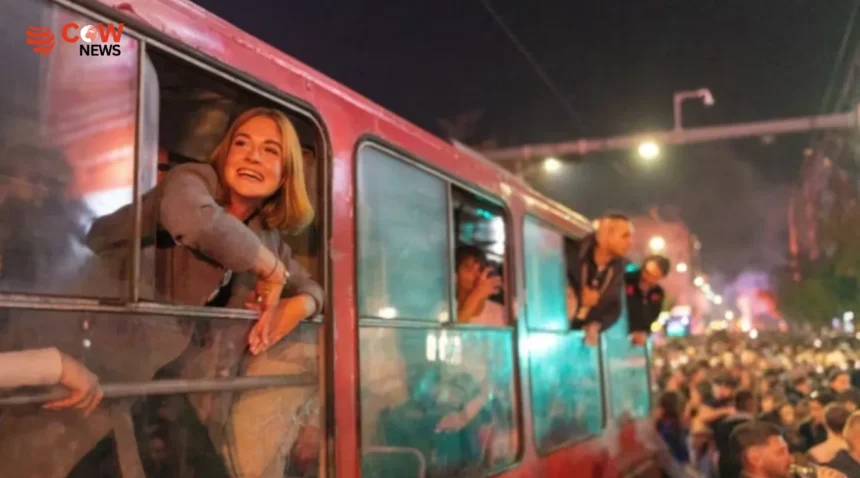
Europe (The COW News Digital) A growing wave of youth-led protests is spreading across Europe, with members of Generation Z demanding better economic opportunities, quality education, affordable housing and greater government accountability. Demonstrations have been reported in France, Italy, Belgium and Albania, while further protests are expected in Germany later this week.
According to a report by Reuters, the movement involves young people born between 1997 and 2012 who are increasingly frustrated by rising living costs, limited employment opportunities, corruption and deteriorating public services. Many protesters say their governments have failed to address the challenges threatening their financial security and future prospects.
In France, demonstrations have taken place in suburban communities, with thousands of people participating in protests. Some gatherings have turned violent, resulting in clashes and reports of damage to businesses and looting. Police have used water cannons and stun grenades to disperse crowds in certain locations.
Education has emerged as another major concern. Young people have complained about staff shortages, deteriorating school buildings and inadequate facilities. In Saint-Denis, north of Paris, 17-year-old student Bilal Nargissi described poor conditions at his school, including a previous incident in which part of a courtyard roof collapsed. Students were evacuated, although no injuries were reported.
Italy has also witnessed growing frustration among young people. A 21-year-old student, identified as Chiara, said her generation was struggling to imagine a secure future. She highlighted shortages of teachers, ageing educational facilities, low-paid jobs and increasingly expensive housing as major obstacles facing young Italians.
In Brussels, Belgium, 19-year-old student Maya Gordel said peaceful efforts to attract attention to young people’s demands had largely gone unnoticed. She argued that disruptive demonstrations received greater media coverage than peaceful protests, reflecting a broader frustration over the limited response to youth concerns.
In Albania, student-led demonstrations against Prime Minister Edi Rama’s government have focused on alleged corruption, limited employment opportunities and weaknesses in the education system. Nineteen-year-old student Zaike Kurti said many young people felt pessimistic about their prospects and were considering leaving the country. Some believe personal connections and political influence matter more than qualifications when competing for opportunities.
Economic pressures appear to be a central factor behind the wider movement. A 2025 European Union survey found that rising prices and the cost of living were major concerns for 40 per cent of people aged 16 to 30. In the same year, approximately 92.7 million people across the EU faced the risk of poverty or social exclusion. The rate stood at 26.3 per cent among those aged 18 to 24, compared with 18.8 per cent among people aged 65 and above.
Serbia provides another example of how youth activism can influence politics. After nearly two years of demonstrations, a student-led movement has become a significant political force. However, Reuters reported that the movement now faces the challenge of translating public mobilisation into effective governance, with its representatives lacking substantial experience in government.
Germany is also preparing for demonstrations addressing inflation, inequality, war and education. As protests spread, European governments face mounting pressure to respond to young people’s demands for economic security, fair opportunities and accountable leadership.
The movement highlights a growing generational divide across Europe, where many young people believe traditional political institutions are failing to address their most urgent concerns. Whether the protests lead to lasting policy changes remains uncertain.