

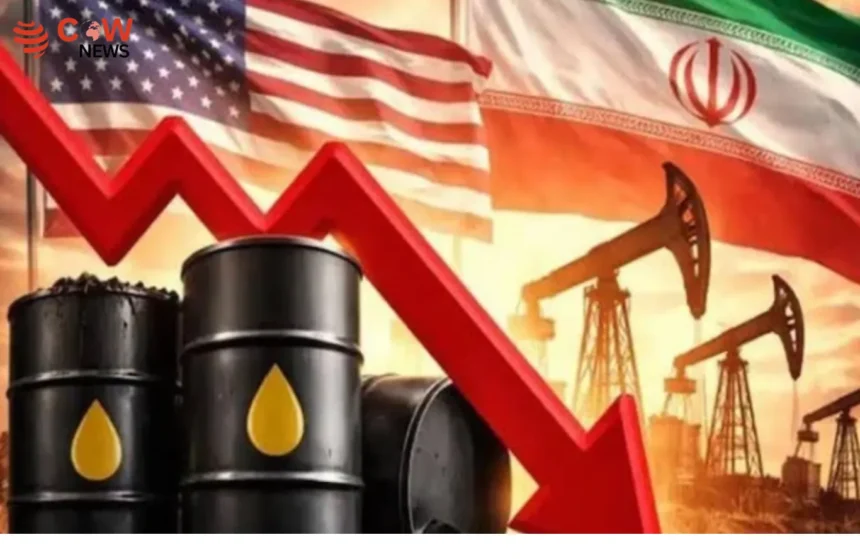
London (The COW News Digital) Global crude oil prices continued to decline, falling by more than one per cent despite rising tensions in the Strait of Hormuz and reports of projectile attacks on commercial vessels passing through the strategic waterway.
According to Reuters, Brent crude futures dropped by $1.47, or 1.6 per cent, to $89.93 per barrel during Wednesday’s trading session.
US West Texas Intermediate (WTI) crude also recorded a decline, falling by $1.52, or 1.9 per cent, to $80.53 per barrel.
The latest fall comes amid concerns over potential oversupply in international energy markets. Despite security risks in the region, oil shipments are reportedly continuing through the Strait of Hormuz and alternative routes, while several oil facilities have also resumed operations.
Market expectations of increased global oil production in 2027 are adding further pressure on prices. Analysts are also concerned that supply could exceed worldwide demand, creating additional downward pressure on crude markets.
Investors are now closely watching the upcoming OPEC+ meeting scheduled for November 29, where member countries are expected to discuss production policy for 2027.
Decisions taken at the meeting could influence future supply levels and play an important role in determining the direction of international oil prices.
Meanwhile, figures from the American Petroleum Institute showed a modest increase in US crude oil inventories. Stocks reportedly rose by 126,000 barrels during the week ending November 20.
The price decline has continued despite renewed security concerns around the Strait of Hormuz, one of the world’s most important routes for international oil shipments.
According to the British maritime trade organisation, three vessels travelling through the strait on Monday were targeted by projectiles from an unknown direction. Iran’s Islamic Revolutionary Guard Corps also claimed that a vessel had been targeted.
The incidents have raised concerns over maritime security and the potential impact of regional tensions on global energy supplies.
However, the continued movement of oil shipments, expectations of higher production and concerns about a possible supply surplus appear to be outweighing immediate geopolitical risks in the market.
With the OPEC+ meeting approaching, traders and energy market observers will be assessing whether producers decide to adjust output in response to changing demand and supply conditions.
The direction of oil prices in the coming weeks is likely to depend on production decisions, global consumption trends and developments affecting shipping through the Strait of Hormuz.