
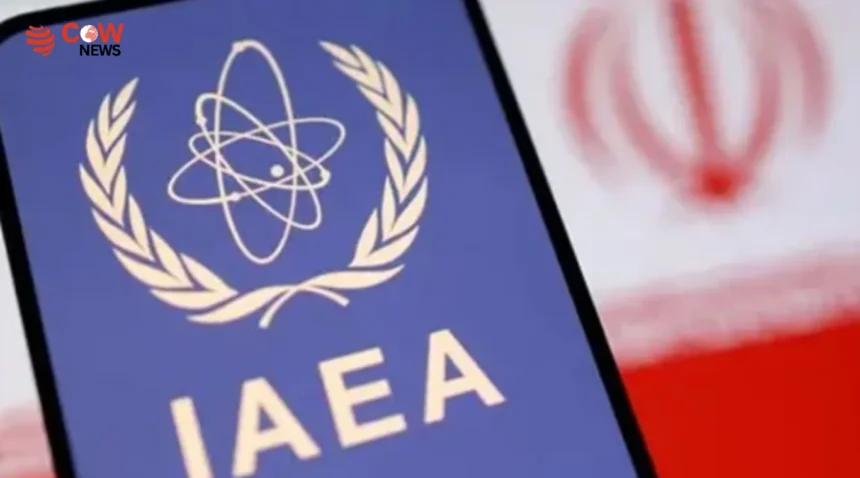
VIENNA(The COW News Digital) The International Atomic Energy Agency (IAEA) Board of Governors has approved a resolution calling for Iran’s nuclear case to be reported to the United Nations Security Council, amid growing concerns over Tehran’s nuclear activities and limited access for international inspectors.
The resolution was adopted during a meeting of the 35-member IAEA Board in Vienna. A total of 23 countries voted in favour of the measure, while Russia, China and Niger opposed it. Eight members either abstained or did not participate in the vote.
The resolution was introduced by the United States, Britain, France and Germany. The move marks a significant escalation in the long-running dispute over Iran’s nuclear programme and comes nearly two decades after the IAEA Board last took a similar step concerning Tehran.
The resolution expresses concern over Iran’s failure to provide complete information about its nuclear activities and the agency’s inability to obtain the access required to verify certain aspects of the country’s programme.
According to the IAEA, questions remain over uranium particles detected at locations that Iran had not previously declared as nuclear sites. The agency has also been unable to fully establish the current status of Iran’s stockpile of highly enriched uranium following recent military strikes that damaged several nuclear facilities.
Iran has consistently maintained that its nuclear programme is intended solely for peaceful purposes and that it has no plans to develop nuclear weapons.
China, Russia Oppose Resolution
China rejected the resolution, arguing that increasing political pressure on Iran would make a diplomatic solution more difficult. Beijing also pointed to military strikes against Iranian nuclear facilities as a factor that disrupted normal cooperation between Tehran and the IAEA.
China called for renewed negotiations and diplomatic engagement, saying that political confrontation would further increase tensions in the region.
Russia and Niger also voted against the resolution, highlighting the support Iran continues to receive from two important international partners.
Western diplomats have suggested that further action against Iran at the Security Council could face significant obstacles because Russia and China are permanent members with veto powers.
The latest IAEA decision therefore appears primarily aimed at increasing diplomatic pressure on Tehran rather than imposing immediate new sanctions.
Background
The latest development follows an IAEA Board resolution adopted in June 2025, which found Iran in non-compliance with its nuclear safeguards obligations. Military attacks on Iranian nuclear facilities followed shortly afterward, further complicating cooperation between Tehran and international inspectors.
Iran subsequently restricted access to some affected facilities, making it difficult for the IAEA to independently verify the country’s nuclear stockpile and the condition of several sites.
The new resolution does not automatically impose additional sanctions on Iran. However, it opens the way for the issue to be taken up by the UN Security Council, where any further measures would require separate diplomatic and legal procedures.