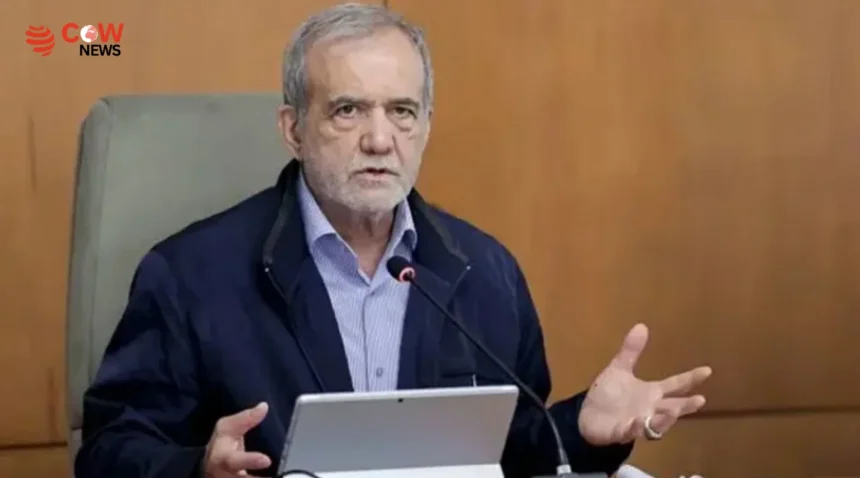
Tehran (The COW News Digital)Iranian President Masoud Pezeshkian has called for greater unity among Muslim countries, saying collective cooperation and mutual understanding could help stop Israeli aggression and promote justice, development and stability across the region.
Pezeshkian said Iran supported every initiative aimed at strengthening unity among Islamic countries and encouraging greater understanding between their governments.
The Iranian president said Muslim nations could use their shared capabilities to present a model of justice and progress to the international community. He argued that closer cooperation among Islamic countries could create a stronger collective response to regional challenges and prevent further escalation.
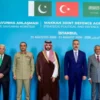
Pezeshkian specifically said unity among Muslim countries could prevent Israel from continuing its military aggression. His remarks came amid heightened regional tensions and diplomatic efforts involving Iran, Pakistan, Saudi Arabia and Türkiye.
The four-nation meeting has brought regional representatives together to discuss security concerns and developments affecting the Middle East. The gathering provides an opportunity for participating countries to exchange views on regional stability and explore areas for diplomatic cooperation.
During his address, Pezeshkian also discussed the impact of Israeli military actions on Iran. He said Israel had believed that military aggression would force Tehran to submit to external pressure. However, he claimed that military operations and pressure had instead strengthened unity among the Iranian people.
According to the president, recent years had witnessed what he described as a widespread pattern of Israeli crimes across the region. He said Iran had faced considerable difficulties and losses but maintained its determination to defend the country.
Pezeshkian stressed that the idea of forcing Iran to surrender was misguided. His comments reflected Tehran’s stated position that military pressure would not compel the country to abandon its national stance.
The Iranian president’s remarks also highlighted the importance his government places on regional cooperation. By calling for stronger ties among Muslim-majority countries, he presented unity as a means of addressing security threats and advancing shared political and economic interests.
Relations among regional powers have become increasingly important as governments seek ways to manage ongoing conflicts and prevent further instability. Cooperation between Iran, Pakistan, Saudi Arabia and Türkiye could provide a channel for dialogue on issues affecting the wider region.
However, the extent to which such cooperation can produce concrete outcomes will depend on the participating countries’ willingness to coordinate their positions and pursue practical diplomatic measures. Differences in national interests and regional priorities may also influence the scope of any joint initiatives.
Pezeshkian’s call for unity comes as diplomatic engagement continues alongside heightened security concerns. His remarks underline Iran’s emphasis on collective action among Islamic countries as a possible response to Israeli military operations and broader regional challenges.
The meeting’s significance will ultimately depend on whether discussions translate into sustained dialogue, closer coordination and specific measures aimed at reducing tensions.
For now, the Iranian president has made clear that Tehran supports stronger cooperation among Muslim nations and rejects the notion that military pressure can force Iran to surrender.