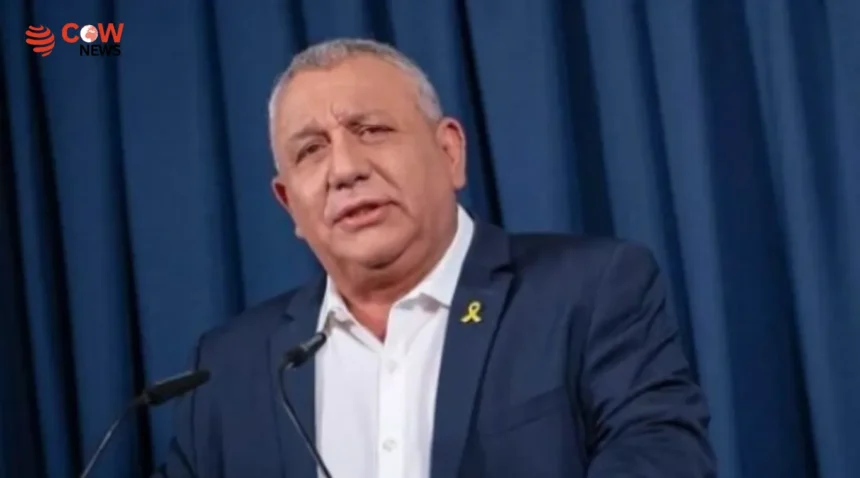
JERUSALEM(The COW News Digital) Israeli opposition leader Gadi Eisenkot has sharply criticized Prime Minister Benjamin Netanyahu, declaring that he is no longer fit to lead Israel amid growing concerns over the country’s economic future, national security and international standing.
Eisenkot, head of the opposition party Yashar and a former chief of staff of the Israel Defense Forces (IDF), accused Netanyahu of pursuing policies that could push Israel further away from the global financial system. He warned that the government’s approach could have serious consequences for the country’s economy, security interests and relationships with international partners.
The opposition leader’s remarks come as political tensions intensify ahead of Israel’s October 27 general election, with Netanyahu facing criticism over his leadership, military strategy and handling of prolonged regional conflicts.
Eisenkot also questioned the government’s reported plans to develop alternative payment mechanisms based on cryptocurrency and blockchain technology to prepare for the possibility of international sanctions. The proposal has raised concerns about whether Israel could face greater economic isolation if its financial links with the international banking system were weakened.
Mockingly referring to the proposed cryptocurrency concept as “Bibi Coin,” Eisenkot argued that moving away from established global financial networks could create significant risks for Israeli businesses, investors and workers.
He warned that such a strategy could undermine investor confidence, complicate international transactions and potentially damage employment opportunities. According to his criticism, maintaining access to global financial markets remains essential for Israel’s economic stability and long-term growth.
The controversy highlights the wider debate over the direction of Israel’s economic and security policies as voters prepare to head to the polls. Netanyahu’s leadership has remained a central issue in the political campaign, particularly amid questions surrounding the government’s military decisions and its approach to regional threats.
Eisenkot has emerged as one of Netanyahu’s prominent political challengers, repeatedly questioning the prime minister’s handling of the country’s security challenges. He has argued that Israel needs a different strategic approach rather than relying on continued military operations to address its problems.
The opposition leader has also expressed reservations about Netanyahu’s ability to lead another military confrontation with Iran following three years of war. His criticism reflects concerns over the potential costs of further escalation and the need to reconsider Israel’s broader security priorities.
While national security remains a major concern for Israeli voters, the economic implications of prolonged conflict and the possibility of international restrictions have also become important subjects of political debate.
Eisenkot’s latest comments underline the growing divide between Netanyahu’s government and opposition figures over how Israel should navigate its economic and geopolitical challenges.
As the election approaches, the debate is expected to focus on leadership, military policy, economic resilience and Israel’s relations with the international community. Whether the opposition can translate these concerns into electoral gains remains to be seen.
For now, Eisenkot’s criticism adds to the pressure on Netanyahu, placing renewed attention on questions about his leadership and the long-term consequences of his government’s policies for Israel’s future.