
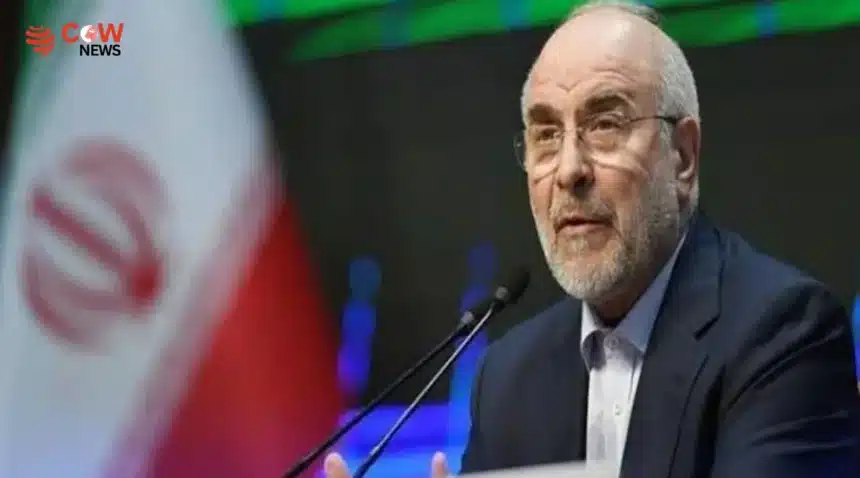
Tehran (The COW News Digital)Iranian Parliament Speaker Mohammad Bagher Qalibaf has said that Iran has reached a stage where its missiles can strike targets anywhere, amid heightened tensions between Tehran and Washington.
Qalibaf said US President Donald Trump could not impose his will on Iran through pressure or the use of American power. He maintained that Iran remained firmly opposed to US pressure and would continue to defend what it considers its national interests.
According to Qalibaf, Iran would not surrender during what he described as an ongoing hybrid war against the country. He said Tehran would also not allow the conflict or external pressure to paralyze the country or disrupt its functioning.
The Iranian parliamentary speaker’s remarks come against the backdrop of continuing tensions between Iran and the United States. Washington and Tehran have remained at odds over regional security, military capabilities and Iran’s broader foreign policy.
Qalibaf’s statement also highlighted Tehran’s emphasis on its missile capabilities as part of its broader deterrence strategy. Iranian officials have repeatedly described the country’s missile program as an important element of national defense and have rejected demands that would restrict those capabilities.
The remarks are likely to draw attention internationally because of their reference to Iran’s ability to reach targets beyond its immediate surroundings. However, Qalibaf did not provide technical details or specify which countries or locations he was referring to in his statement.
Iran has frequently stressed that it will respond to threats against its territory while maintaining that its military capabilities are intended to protect the country. The United States, meanwhile, has continued to apply diplomatic and economic pressure on Tehran over a range of security and regional issues.
Qalibaf’s comments underline the firm position being maintained by Iran’s political leadership as tensions remain high. His statement also signals that Tehran intends to project military readiness while resisting what it views as attempts by Washington to dictate its policies.
The latest remarks come at a sensitive time for regional diplomacy, with governments across the Middle East closely monitoring developments involving Iran, the United States and other regional actors. International officials have continued to emphasize dialogue and diplomatic engagement as mechanisms for preventing further escalation.
While Qalibaf’s comments represent the position of a senior Iranian political official, the statement itself does not establish whether or when Iran would use its missile capabilities. Any assessment of operational capabilities or potential military action would depend on additional information from relevant authorities and independent verification.
The statement nevertheless adds to the increasingly assertive rhetoric surrounding Iran’s military capabilities and its confrontation with external pressure.