

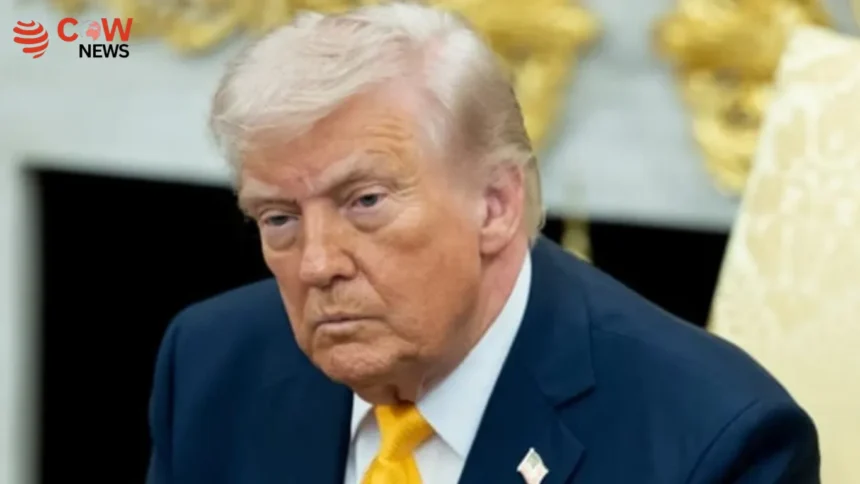
Washington (The COW News Digital) US President Donald Trump has attributed the Republican Party’s sweeping losses in the 2026 midterm elections to public opposition to the war with Iran, rising fuel prices and what he described as widespread dislike of Israel among American voters.
Trump said these issues had significantly influenced voters’ decisions and contributed to the Democrats’ major electoral victory.
“There’s a great dislike, incredibly, for Israel. There seems to be a dislike for Israel,” Trump said, identifying anti-Israel sentiment alongside the Iran war and higher gasoline prices as primary reasons for the Republican setback.
The president also argued that the outcome might have been different if he had personally been on the ballot. He said he had campaigned actively for Republican candidates but suggested that voters were dissatisfied with some of the candidates he endorsed.
Trump acknowledged that the conflict with Iran had created political difficulties for his administration and the Republican Party.
According to the president, voters were unhappy with the war and the increase in gasoline prices associated with the conflict.
“They didn’t like the war. They didn’t like the fact that gasoline went up,” Trump said during the interview.
The war has remained a contentious issue in American politics, with Democrats criticising the administration over the conflict’s economic consequences and its impact on household expenses.
Higher fuel prices have placed additional pressure on consumers, making affordability and the cost of living central issues during the election campaign.
Trump nevertheless defended his decision to launch military action against Iran, maintaining that preventing Tehran from acquiring nuclear weapons was a necessary national security priority.
He said he would make the same decision again despite the political consequences.
The 2026 midterm elections delivered a significant setback to Republicans, with Democrats securing control of both the House of Representatives and the Senate.
The result is expected to make it more difficult for Trump to advance his legislative agenda during the remaining years of his presidency.
Election coverage and political analysis have highlighted several factors behind the Democratic victory, including inflation, rising living costs, opposition to the Iran war and dissatisfaction with the administration. <Cite refs={[“turn498524news37″,”turn498524news10”]}/>
Trump’s remarks about Israel have also drawn attention to the political debate surrounding Washington’s close relationship with the Israeli government.
However, the president did not provide polling data or specific figures during the interview to demonstrate how negative views of Israel affected individual voting decisions.
His comments represent his assessment of the election outcome rather than independently established evidence that anti-Israel sentiment was a decisive factor.
Despite acknowledging that public sentiment towards Israel may have influenced the elections, Trump continued to defend his administration’s military policy in the Middle East.
He also reiterated his position that American military action had prevented Iran from obtaining nuclear weapons and helped protect Israel.
The comments come as the Republican Party faces growing pressure to reassess its political strategy following the midterm defeat.
The election results have intensified debate within the party over foreign policy, economic priorities and the political consequences of the Iran conflict.
Trump’s explanation highlights the challenges facing his administration as it seeks to maintain public support while dealing with international security issues and rising domestic costs.