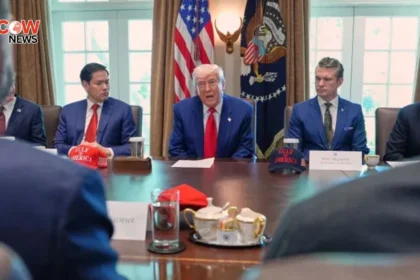
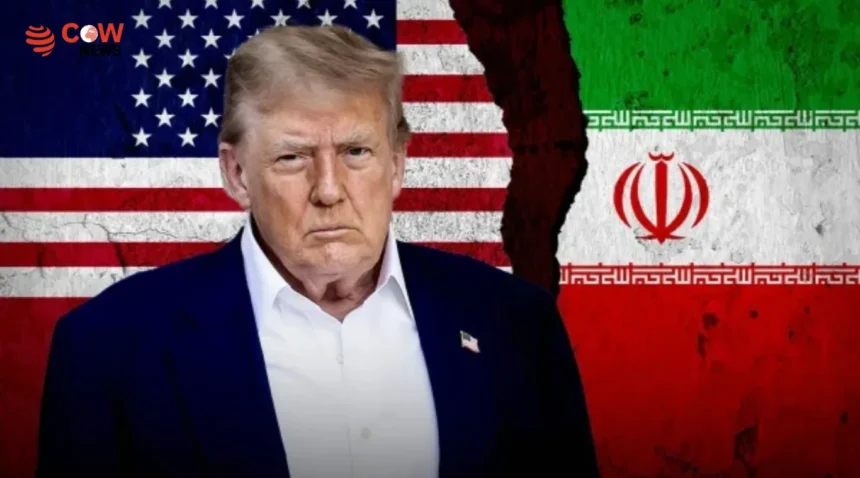
WASHINGTON (The COW News Digital) U.S. President Donald Trump has rejected an Iranian proposal aimed at reopening the Strait of Hormuz within seven days and ending hostilities, while reports indicate that Washington is keeping open the possibility of renewed military action against Iran after the U.S. midterm elections in November.
Trump told reporters that he had rejected Tehran’s proposal, describing the suggested arrangement as unacceptable. He also maintained that the United States has control over the strategically important Strait of Hormuz, a major global energy route that has remained at the center of the confrontation between Washington and Tehran.
Iran had presented a seven-day roadmap through Qatari mediators. Iranian Foreign Minister Abbas Araghchi said the proposal would allow the Strait of Hormuz to reopen and normal maritime traffic to resume if Washington met Tehran’s conditions. The proposal was presented during diplomatic activity surrounding the United Nations General Assembly in New York.
According to reports citing U.S. officials, Trump has rejected the proposal while leaving open the possibility of resuming strikes against Iran following the November midterm elections. The Wall Street Journal report cited by several international outlets said renewed military action remained under consideration.
Iran’s proposal reportedly included measures involving the reopening of the strategic waterway, easing U.S. military pressure and sanctions, and resuming discussions over Iran’s nuclear program. Tehran has also called for an end to hostilities as part of the proposed framework.
Araghchi said Tehran was still awaiting an official response through mediators despite Trump’s public rejection. Iranian officials indicated that the proposal would remain subject to diplomatic discussions and the conditions outlined by both sides.
The Strait of Hormuz remains strategically significant because of its role in international energy transportation. Any prolonged disruption could have wider implications for oil markets, shipping and regional economies. Recent reports have also linked developments around the waterway to fluctuations in global oil prices and tanker availability.
The latest developments come amid months of confrontation between the United States and Iran, with diplomatic efforts continuing alongside military tensions. Both sides have publicly discussed the possibility of negotiations, but major differences remain over sanctions, military operations, the Strait of Hormuz and Iran’s nuclear program.
For now, Tehran is awaiting further communication through diplomatic channels, while Washington has rejected the seven-day proposal. The coming weeks, including the period leading up to the U.S. midterm elections, are expected to remain closely watched as both countries weigh diplomatic and military options.