
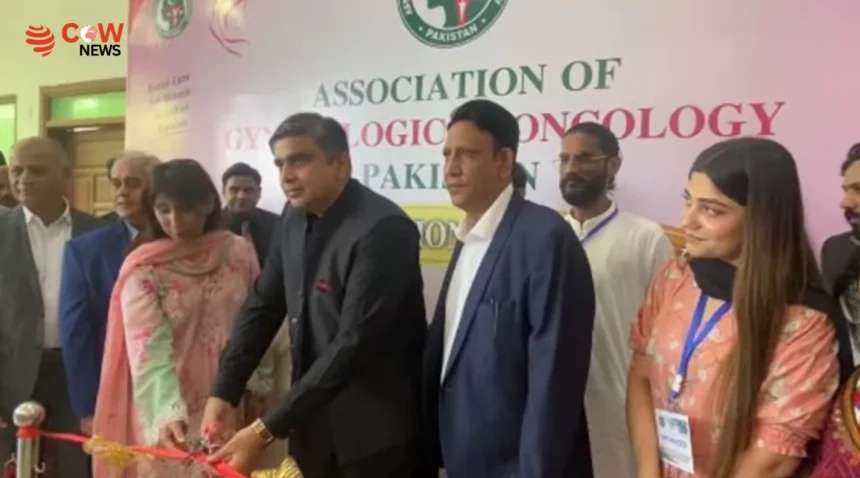
Karachi (The COW News Digital) Sindh Government Lyari General Hospital has achieved a significant milestone in women’s healthcare by successfully completing more than 100 robotic gynaecological surgeries, marking progress in the adoption of advanced medical technology in Pakistan’s public healthcare sector.
A ceremony was held at the hospital to celebrate the achievement. Those attending included Sindh Health Secretary Tahir Hussain Sangi, Member of the National Assembly Yousuf Baloch, Nadir Nabil Gabol, Shaheed Mohtarma Benazir Bhutto Medical College Principal Professor Dr Anjum Rehman, Professor Dr Sehar Fatima and other officials and medical professionals.
Addressing the gathering, Sindh Health Secretary Tahir Hussain Sangi said the introduction of robotic surgery at Lyari General Hospital reflected the provincial government’s ongoing efforts to bring modern technology into the healthcare system.
He said the Sindh government was also introducing robotic surgery and advanced medical equipment at institutions including Jinnah Postgraduate Medical Centre. These initiatives, he added, were intended to improve treatment facilities and provide patients with better healthcare services.
Sangi congratulated the hospital’s medical team on completing more than 100 robotic gynaecological procedures. He said modern surgical technology could help make treatment more effective and that the government was continuing to invest in improving healthcare facilities. Public-private partnerships were also being used to introduce advanced technology at medical institutions.
The health secretary further stated that several new healthcare projects and facilities across Sindh were expected to be inaugurated in the coming months. He mentioned ongoing projects in Razzaqabad and Gulshan-e-Hadeed.
During the event, Sangi was also asked about the formation of a special medical board in the Mir Raza case. He responded that he was not aware of the matter.
Nadir Nabil Gabol, speaking at the ceremony, highlighted the provincial government’s reported healthcare spending and development plans. He said approximately Rs400 billion had been allocated for healthcare and referred to an allocation equivalent to 11 per cent of gross domestic product. These figures were presented in his remarks at the event.
Gabol also said the Lyari Transformation Project would support local development and help expand access to modern facilities. He described the adoption of advanced medical technology as an important step towards improving healthcare services for residents.
Professor Dr Anjum Rehman, principal of Shaheed Mohtarma Benazir Bhutto Medical College, described the completion of more than 100 robotic surgeries as a major achievement. He said the institution had played a pioneering role in introducing and promoting telesurgical procedures within Pakistan’s public healthcare sector.
Addressing concerns about the cost of robotic surgery, Rehman claimed that the procedure could be 63 per cent less expensive than conventional surgery. He also highlighted efforts to strengthen medical expertise through specialised training programmes for trainers.
Professor Dr Sehar Fatima explained the potential benefits of telesurgery, stating that the technology could enable a surgeon to perform an operation remotely from another country. She also made claims about the absence of complications associated with the procedure, although such claims would require independent clinical evidence to establish their accuracy.
The robotic surgery facility at Lyari General Hospital was inaugurated recently by Sindh’s health minister, according to the information shared at the event. The hospital’s services are being used by women from Lyari, other parts of Karachi and additional cities.
Sindh Health Minister Dr Azra Fazal Pechuho also visited Lyari General Hospital in connection with the development of its robotic surgery services.
The milestone highlights ongoing efforts to expand access to advanced surgical technology in public hospitals. Its longer-term impact will depend on factors including affordability, specialist training, clinical outcomes and the availability of the service to patients across different communities.