

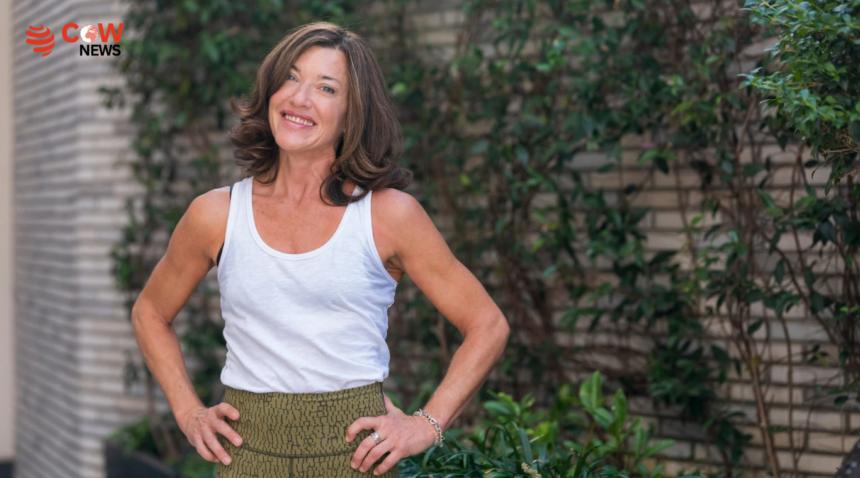
Islamabad (The COW News Digital) After years of severe hip pain that left her struggling to walk, yoga instructor Amme Poulton underwent a £22,000 double hip replacement. Five months after surgery, she has regained her independence, returned to teaching yoga and is performing handstands again.
A yoga teacher who spent years battling debilitating hip pain has made a remarkable recovery after undergoing a double hip replacement at the age of 52. Amme Poulton, who once struggled to walk even short distances, is now back teaching yoga and demonstrating challenging poses, including handstands.
Her journey highlights the physical and emotional challenges of living with severe hip osteoarthritis, the difficulties of navigating a lengthy healthcare process, and the importance of rehabilitation following major joint replacement surgery.
Poulton’s hip problems developed over several decades, beginning with a teenage injury during her cheerleading days in Alabama, United States. Although she continued to lead an active lifestyle and built a career as a yoga instructor, the condition gradually worsened until everyday movements became increasingly painful.
After years of medical appointments, investigations and unsuccessful attempts to manage the pain, she eventually decided to pursue private surgery in London.
The operation, performed on March 5, 2026, replaced both damaged hip joints. Her recovery involved rehabilitation, regular physiotherapy and a gradual return to movement.
Five months later, she says she is beginning to feel like herself again.
Poulton’s hip difficulties can be traced back to her teenage years in Alabama, where she was an enthusiastic cheerleader at school.
During that period, she regularly performed demanding movements, including the drop split, a manoeuvre associated with cheerleading routines. However, one of these movements resulted in an injury to her pelvis.
The injury eventually contributed to a pelvic imbalance, in which one side of the pelvis sits slightly higher than the other.
Although the consequences were not immediately severe, Poulton believes the injury affected her musculoskeletal system over time.
In 1999, when she was 25, she moved to San Francisco. It was there that she discovered yoga, which initially helped her manage the discomfort in her hips.
Within a few years, she had become a yoga instructor, teaching rocket yoga, a dynamic and physically demanding style of yoga.
Her professional and personal life continued to develop. In 2009, she moved to the United Kingdom and later became a mother to two children.
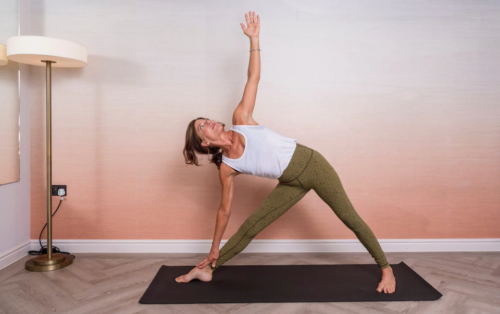
For many years, yoga remained an important part of her life, helping her maintain flexibility, strength and an active lifestyle.
However, the underlying hip problems continued to develop.
Poulton’s condition took a significant turn following complications associated with an umbilical hernia that developed after the birth of her first child.
The hernia required several procedures over the years. During the COVID-19 pandemic, the problem became more troublesome, with the hernia protruding, recurring infections and surgical stitches partially failing.
These complications prevented her from performing several exercises that had previously helped her manage her pelvic imbalance.
She was unable to stretch properly or carry out her usual core-strengthening and side-leg exercises.
As a result, her hip symptoms became increasingly difficult to control.
Over approximately three years, the degeneration in both hips progressed from moderate to severe. Her mobility deteriorated, and she eventually had to rely on crutches.
The pain began affecting almost every aspect of her life.
Walking became difficult. Standing for prolonged periods was painful. Even simple household tasks required considerable effort.
For someone whose career depended on physical movement, the situation was particularly distressing.
In 2021, Poulton began making repeated visits to her general practitioner in search of answers.
Medical investigations included tests for rheumatoid arthritis and other possible causes of her symptoms.
However, some doctors initially found it difficult to believe that she could have severe osteoarthritis because she was relatively young, slim, physically fit and had maintained a good range of motion.
Hip osteoarthritis is commonly associated with older adults, although it can also affect younger people.
Poulton remained convinced that her symptoms were not normal.
Despite the pain, she continued working as much as possible and used crutches to support her mobility.
Her condition also attracted unwanted comments from people who knew her as a yoga instructor.
Some questioned whether yoga had contributed to her difficulties, while others suggested that the practice was no longer helping her.
The comments were emotionally difficult to manage, particularly as she was already struggling with severe pain.
For Poulton, the experience demonstrated how easily the seriousness of a medical condition can be overlooked when a patient does not fit the expected profile.
Poulton had to wait several years before receiving a clear diagnosis and being considered for surgery.
She repeatedly requested further investigations, including an X-ray. Her first X-ray was eventually performed in 2023.
After additional assessments, she finally secured an appointment with an NHS orthopaedic surgeon in February 2025.
The assessment confirmed that she required a bilateral hip replacement, meaning both hip joints needed to be replaced.
However, the operation could not proceed because she had an open wound associated with her ongoing umbilical hernia complications.
The surgeon referred her for another hernia repair, which was eventually carried out in October 2025.
This meant that her hip replacement had to be delayed further.
During the waiting period, Poulton received stronger pain medication and participated in pain management, cognitive behavioural therapy and physiotherapy through the NHS.
Although these treatments were intended to help her cope with the condition, they did not resolve the underlying joint damage.
The prolonged delay had a significant impact on her quality of life.
As a yoga instructor who had previously taught classes involving more than 60 students, she found it increasingly difficult to perform even basic movements.
Her confidence, professional identity and independence gradually deteriorated.
Poulton’s experience was not limited to physical discomfort.
The pain affected her relationship with her children, her social life and her sense of self-worth.
She found herself unable to complete ordinary household activities without assistance.
Picking up an object from the floor could become a major challenge. Making the bed required considerable physical effort.
She particularly struggled with the feeling that her children had grown accustomed to seeing her in pain.
Her teenage son, she said, could barely remember a time when she was not suffering from hip problems.
As the condition worsened, Poulton began avoiding social activities.
By autumn 2025, she had stopped regularly meeting friends or going on dates.
She found it difficult to cope with the reactions of people who saw her struggling to walk.
At times, the pain became so severe that she needed a wheelchair.
Her legs also experienced significant muscle wasting because she was unable to maintain her usual level of physical activity.
The constant discomfort affected her appetite, sleep and ability to think clearly.
She described reaching a point where she felt desperate for relief.
For Poulton, the decision to pursue surgery was not simply about improving mobility. It was about reclaiming her independence and returning to a life that had become increasingly restricted.
After years of waiting and deteriorating mobility, Poulton began researching alternative options.
She wanted to understand whether she could undergo surgery sooner and avoid further deterioration.
Eventually, she arranged a private bilateral hip replacement at Weymouth Street Hospital in London.
The procedure was performed by orthopaedic specialists Dr Kristian Kley and Dr Adrian Wilson of Orthopaedic Innovation.
The cost was approximately £22,000 for both hips, compared with £18,500 for a single hip replacement.
Poulton decided that replacing both hips during the same operation was the most practical option, given that both joints had sustained significant damage.
She received financial assistance from her parents, who were able to help after downsizing their home.
The decision represented a major financial commitment, but she believed the opportunity to regain her mobility was worth pursuing.
Her surgery took place on March 5, 2026.
Poulton underwent a minimally invasive surgical technique designed to preserve the surrounding muscles and tendons.
According to her account, the surgeons accessed the hip joints by passing between the muscles and tendons rather than cutting through them.
The procedure reportedly took approximately 50 minutes.
She contrasted this with the longer operating time she had been told could be required for a more conventional approach.
Although undergoing a double hip replacement was an intense experience, Poulton was delighted by the immediate reduction in pain.
The following day, she was able to stand and walk using crutches, in accordance with the rehabilitation recommendations.
For the first time in years, the constant and overwhelming pain had substantially subsided.
She described the change as if the noise of pain in her head had suddenly been replaced by silence.
The improvement gave her renewed hope that she could eventually return to her previous lifestyle.
However, the operation was only the beginning of her recovery.
Following surgery, Poulton spent a week at The Clavadel rehabilitation centre in Guildford.
During this period, she began performing basic exercises to reactivate her muscles and improve her mobility.
Her recovery also involved regular physiotherapy sessions twice a week at the 1150 Club in London.
She worked with consultant physiotherapist Leslie Abrahams.
Initially, the rehabilitation programme focused on strengthening and improving the movement of her hips.
As her recovery progressed, the physiotherapy sessions also addressed her back, which had been affected by years of altered movement patterns.
Poulton discovered that some movements she had previously performed naturally had become difficult.
These included rotating her shoulders, bending her knees and straightening her legs during backward lunges.
Her physiotherapist helped guide her through these movements and gradually restore her confidence.
Hydrotherapy also became part of her rehabilitation.
Exercises performed in water provided additional support and allowed her to work on movement in a controlled environment.
The rehabilitation process was not always straightforward.
After years of pain and restricted movement, her muscles had become significantly weaker.
She also had to overcome the fear associated with moving freely again.
Although Poulton experienced considerable improvement after surgery, her recovery required patience.
She initially found it difficult to leave the house and felt anxious about whether the operation would ultimately deliver the results she hoped for.
Even after the pain had reduced, her body continued to rely on old movement patterns.
At night, she sometimes woke up and found herself limping when getting out of bed.
The muscle weakness affected her ability to perform simple movements, and she frequently needed assistance from her physiotherapist.
Her recovery was therefore not simply about healing the replaced joints.
It also involved rebuilding strength, correcting movement habits and restoring confidence.
Abrahams encouraged her to avoid rushing the process.
Activities such as jogging, hiking on uneven ground and dancing could eventually become possible, but she needed to allow her body sufficient time to recover.
Poulton gradually began incorporating more movement into her daily routine.
She started working in her garden, organising her home and carrying out activities that had previously been difficult.
These small improvements helped her regain a sense of independence.
By October 2026, approximately five months after her double hip replacement, Poulton had made significant progress.
She was once again demonstrating yoga poses to her students.
Remarkably, she had also returned to practising arm balances, including handstands.
The progress was particularly meaningful because her previous condition had left her struggling to stand and walk.
She had gradually regained the confidence to teach classes and take on new professional commitments.
Yoga continued to play an important role in her rehabilitation.
Years of experience as an instructor had given her an understanding of body awareness, movement and balance.
However, she also recognised that recovering from major joint surgery required a different approach from her usual yoga practice.
Rather than pushing herself to achieve difficult poses immediately, she had to rebuild her physical capacity step by step.
Her return to teaching represented more than a professional milestone.
It was a sign that she was recovering the independence and confidence that chronic pain had taken away.
Despite her remarkable recovery, Poulton still does not have a definitive explanation for why both hips deteriorated so severely.
She believes her teenage pelvic injury may have contributed to the problems she experienced later in life.
The subsequent pelvic imbalance, changes in movement and complications associated with her hernia may also have played a role.
However, doctors have not established a single specific cause.
Her experience illustrates that hip osteoarthritis can develop through a combination of factors.
These may include previous injuries, changes in joint mechanics, age-related degeneration and other individual risk factors.
It is important to recognise that not every person who experiences a pelvic injury will develop severe osteoarthritis.
Similarly, being physically fit or maintaining a slim body weight does not necessarily prevent joint degeneration.
Poulton’s case highlights the importance of investigating persistent joint pain rather than dismissing symptoms based solely on age or physical appearance.
Looking back, Poulton says the difference between her life before and after surgery is extraordinary.
Friends have noticed improvements in her voice and overall mood.
She has regained the ability to walk more quickly, work around her home and participate in activities that were previously beyond her reach.
One recent experience particularly demonstrated how far she had come.
While travelling to a yoga class, she found herself running late because of train delays.
As she hurried along the station platform, she realised she was speed-walking without the severe pain that had once made even a few steps unbearable.
The moment left her smiling.
For someone who had previously struggled to move and sometimes required a wheelchair, being able to walk quickly again was a significant achievement.
Her recovery has also helped her reconnect with the parts of her life that matter most.
She is once again teaching yoga, spending time with her children and enjoying the freedom of movement.
Poulton’s experience raises important questions about the diagnosis and treatment of chronic hip pain.
Persistent pain, reduced mobility and difficulty performing daily activities should not be ignored, particularly when symptoms continue to worsen.
Hip osteoarthritis can have a substantial impact on a person’s quality of life.
Although conservative treatments such as physiotherapy, medication and exercise may help manage symptoms, some patients with advanced joint damage may eventually require hip replacement surgery.
The appropriate treatment depends on the severity of the condition, the patient’s overall health, functional limitations and individual circumstances.
Hip replacement surgery is a major procedure, and recovery can vary considerably between individuals.
A successful outcome generally requires a combination of surgical care, rehabilitation, appropriate exercise and realistic expectations.
Poulton’s return to handstands five months after surgery is an impressive personal achievement, but it should not be regarded as a typical recovery timeline or a target for every patient.
Anyone considering hip replacement surgery should discuss the risks, benefits, rehabilitation requirements and expected recovery with a qualified orthopaedic specialist.
Amme Poulton’s journey from debilitating hip pain to returning to yoga demonstrates how profoundly joint problems can affect a person’s physical and emotional wellbeing.
For years, she struggled with progressive osteoarthritis, limited mobility and the frustration of waiting for treatment.
Her decision to undergo a £22,000 double hip replacement marked a turning point.
With the support of her surgical team, rehabilitation specialists and family, she gradually rebuilt her strength and confidence.
Five months after surgery, she was back teaching yoga and demonstrating handstands.
Her experience serves as a reminder that recovery from major surgery is not always immediate, but gradual progress can make a meaningful difference.
For Poulton, the greatest achievement is not simply returning to advanced yoga poses.
It is being able to walk, work, care for her family and enjoy everyday life without the constant pain that had dominated her existence for so many years.
Her story offers hope to people living with severe hip pain while emphasising the importance of appropriate medical assessment, individualised treatment and a carefully managed rehabilitation programme.