
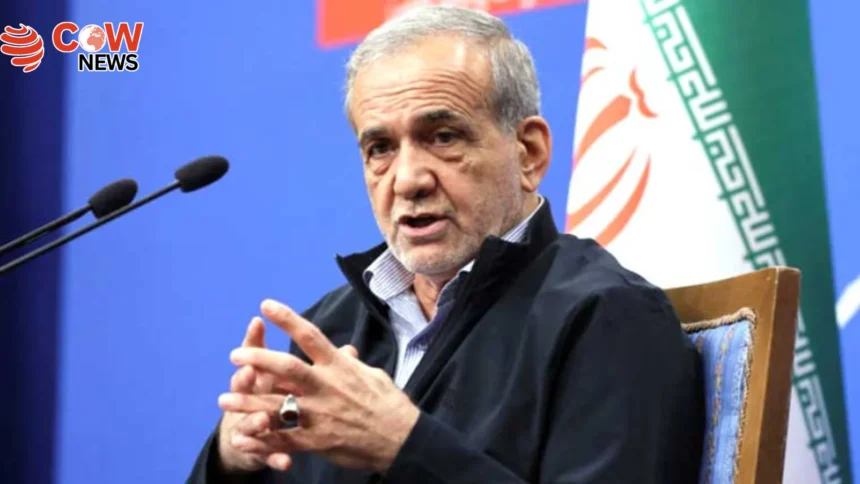
Tehran(The COW News Digital) Iranian President Masoud Pezeshkian has firmly rejected what he described as “humiliating” conditions set by Washington for the continuation of diplomatic negotiations, signaling renewed strain in already tense relations between Iran and the United States.
Addressing a public gathering, President Pezeshkian said Iran would not accept talks that undermine its dignity or sovereignty. He accused Washington of imposing unacceptable preconditions in an attempt to dictate the terms of engagement. “We will not accept humiliating conditions under any circumstances,” he stated, adding that Iran has previously engaged in dialogue with the United States in good faith.
Read More:
- US Slams Palestine Recognition as Empty Symbolism
- Taliban Extend Internet Curbs, Trade Faces Major Hit
- Late-Night Dinners Linked to Higher Blood Sugar Risk
Pezeshkian recalled past negotiations with Washington, claiming they were undermined by hostile actions rather than diplomacy. He alleged that US attacks on Iranian nuclear facilities sabotaged earlier talks and eroded trust between the two sides. According to the Iranian president, such actions contradict claims of seeking dialogue and demonstrate a lack of seriousness in pursuing peaceful solutions.
Despite the sharp criticism, Pezeshkian emphasized that Iran does not seek confrontation. He reiterated Tehran’s stated position that it desires peace and stability and has no intention of engaging in conflict with any country. “We want peace and do not want confrontation with anyone,” he said, stressing that Iran has repeatedly clarified its stance on nuclear weapons.
The Iranian leader once again denied allegations that Tehran is pursuing nuclear arms, asserting that Iran has no intention of building an atomic bomb. He maintained that Iran’s nuclear program is for peaceful purposes and operates within the framework of its national interests and international commitments, while also defending the country’s right to technological and scientific advancement.
Relations between Tehran and Washington have remained fraught for years, shaped by sanctions, disputes over Iran’s nuclear program, and regional security concerns. Diplomatic efforts to revive negotiations have faced repeated setbacks, with both sides accusing each other of bad faith and escalation.
Analysts say Pezeshkian’s remarks reflect growing frustration within Iran over what it views as pressure tactics rather than genuine diplomacy. Iranian officials argue that negotiations can only succeed if conducted on the basis of mutual respect and equality, without threats or coercive demands.
From Washington’s perspective, officials have long maintained that strict conditions are necessary to ensure transparency and prevent nuclear proliferation. However, critics warn that rigid positions on both sides risk further entrenching the deadlock and reducing the chances of meaningful engagement.
As tensions persist, the international community continues to watch closely, with concerns that the failure of dialogue could heighten instability in an already volatile region. Whether both sides can bridge their differences through respectful diplomacy remains an open question.