

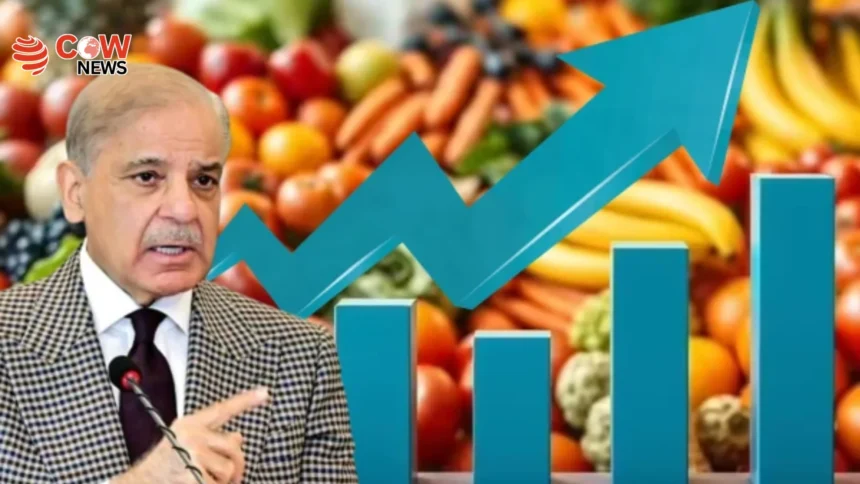
ISLAMABAD(The COW News Digital) Pakistan has witnessed a sharp rise in short-term inflation, intensifying financial pressure on households and fueling public criticism over the government’s handling of the economy.
According to the latest data released by the Pakistan Bureau of Statistics, the Sensitive Price Indicator (SPI) recorded a year-on-year increase of 14.52 percent for the week ending May 14. On a weekly basis, the index also rose by 0.47 percent, indicating that inflationary pressures remain persistent despite monetary tightening measures and broader economic slowdown.
The latest figures highlight significant increases in essential commodities and energy costs. Petrol prices have surged by 64.23 percent on a yearly basis, while diesel has become 61.61 percent more expensive. Basic food and utility items have also seen steep increases, with flour rising by 57.56 percent, electricity charges for lower consumption slabs increasing by 52.58 percent, and liquefied petroleum gas (LPG) prices climbing by 48.34 percent.
Similarly, vegetable prices have recorded sharp upward movement, with onions increasing by 50.06 percent and tomatoes by 40.66 percent compared to the same period last year. These increases have severely impacted household budgets, particularly for low- and middle-income families already struggling with reduced purchasing power.
Economists attribute the ongoing inflationary trend to a combination of supply chain disruptions, rising transport costs, and external geopolitical tensions. Experts note that instability involving major global powers and oil-producing regions has contributed to higher international crude oil prices, which in turn have increased transportation and import costs in Pakistan.
Dr. Jazib Mumtaz, an economist associated with the Institute of Business Administration, said that inflation is being driven primarily by supply-side constraints and escalating freight charges. He explained that rising fuel costs have increased logistics expenses, which have then been passed on to consumers through higher prices of imported goods and essential commodities.
He further noted that uncertainty in the region has triggered panic buying and hoarding behavior among some segments of the market, further intensifying price pressures. Dr. Mumtaz urged the government to provide immediate relief by reducing petroleum development levies to ease the burden on consumers.
Public reaction has been increasingly critical, with many citizens expressing concern over declining living standards and rising unemployment. The government, meanwhile, continues to face pressure to implement effective measures to stabilize prices and improve economic conditions.
Analysts warn that without structural reforms and improved supply chain efficiency, inflation may remain elevated in the coming months, further straining household finances and slowing economic recovery.