

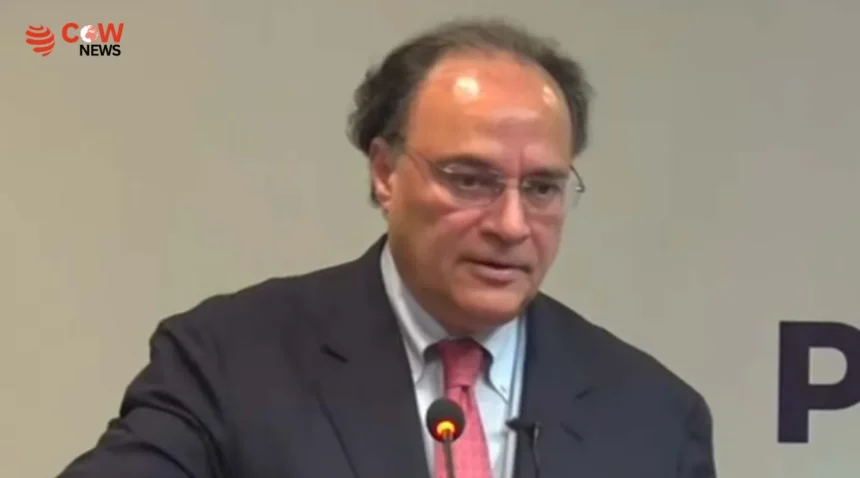
Lahore (The COW News Digital) Federal Finance Minister Muhammad Aurangzeb has warned that ongoing global conflicts could affect the prices of essential commodities in Pakistan, highlighting the potential economic consequences of international instability.
Addressing a ceremony in Lahore, Aurangzeb said the global economy was facing uncertainty, but Pakistan’s economic recovery was continuing despite multiple challenges. He added that the government was working to facilitate investors and provide an environment conducive to business and investment.
The finance minister said international investors were considering Pakistan alongside other markets, with investors from Europe and the United States showing interest in the country’s bonds. He emphasised that the government remained committed to strengthening investor confidence and supporting economic growth.
Aurangzeb acknowledged that international conflicts could place additional pressure on the prices of essential goods, particularly if disruptions affected energy supplies, transportation costs and global trade. Pakistan’s reliance on imported energy and other commodities makes the domestic economy vulnerable to fluctuations in international markets.
He said the government was pursuing reforms to improve the tax system and broaden the tax base. Encouraging private-sector participation in economic development was also among the administration’s priorities, he added.
Discussing fuel subsidies, the minister said the government had tried to prevent a situation in which people would have to stand in long queues for petrol, as had occurred in some other countries. He explained that targeted subsidies had been introduced to provide relief to those who needed assistance, rather than offering blanket support to all consumers.
Aurangzeb also said preparations were underway to meet Pakistan’s energy requirements during the winter season. Ensuring adequate supplies of natural gas and liquefied natural gas (LNG) remained a priority, while the availability of crude oil and other energy sources was currently satisfactory, according to the minister.
He noted that Pakistan had faced balance-of-payments crises in the past because of its dependence on imports. However, he said sustained efforts over four to five years had helped restore the country’s credit rating to the B category.
The finance minister further expressed optimism that Pakistan’s remittances would reach $44 billion during the current fiscal year. Although concerns had emerged that international conflicts could reduce remittance inflows, he said the country had recorded an increase instead.
Remittances remain an important source of foreign exchange for Pakistan, supporting household incomes and helping meet external financing requirements. Their continued growth could provide additional support to the country’s external account.
The minister’s remarks come as policymakers seek to maintain economic stability while managing the risks posed by international developments. Rising global commodity prices, energy-market disruptions and uncertainty in international trade could create challenges for inflation, household purchasing power and business costs.
The government’s ability to maintain energy supplies, strengthen public finances and protect vulnerable households will remain important in limiting the domestic impact of external economic shocks.