

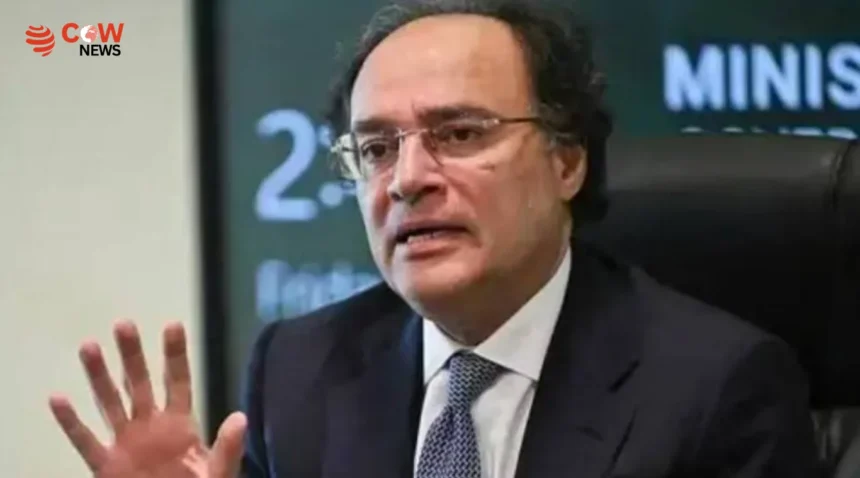
LAHORE (The COW News Digital) Federal Finance Minister Muhammad Aurangzeb has warned that global conflicts and international economic uncertainty could put further pressure on essential commodity prices in Pakistan, while maintaining that the country’s economic recovery remains on track despite continuing challenges.
Aurangzeb said the global economy was facing uncertainty, prompting investors to reassess opportunities in Pakistan and other international markets. He emphasized that the government was continuing economic reforms aimed at strengthening financial stability, improving the tax system and expanding the country’s tax base.
The finance minister said encouraging private-sector investment remained a key government priority, adding that sustainable economic growth required a stronger business environment and effective economic policies.
Addressing concerns about fuel supplies, Aurangzeb said the government had made efforts to ensure that consumers in Pakistan did not face the long queues witnessed in some other countries. He also defended the government’s targeted subsidy policy, arguing that financial assistance should focus on those who need it rather than providing broad subsidies to owners of large vehicles.
The minister’s remarks come amid concerns that international conflicts could disrupt energy markets, increase transportation costs and push up the prices of essential goods. However, he did not indicate that a specific increase in domestic prices was inevitable.
Aurangzeb also said Pakistan would avoid rushing into borrowing from international capital markets during the current fiscal year. He explained that decisions on external financing would depend on the country’s financial requirements, debt management strategy and prevailing market conditions.
The government, he added, was working to meet the country’s energy needs during the winter season, with particular attention to ensuring the availability of natural gas and liquefied natural gas (LNG). He said supplies of crude oil and other energy sources remained satisfactory and that efforts were being made to prevent energy shortages.
Discussing Pakistan’s economic challenges, the finance minister said the country’s heavy dependence on imports had contributed to balance-of-payments crises in the past. Such pressures have historically affected foreign exchange reserves and increased the need for external financing.
Aurangzeb said sustained efforts over the past four to five years had helped Pakistan return to the B-category of credit ratings, describing the development as an important step in improving the country’s financial standing. Credit ratings can influence borrowing costs and investor confidence, although broader economic conditions also determine access to international financing.
The minister reiterated the government’s commitment to continuing structural reforms and facilitating investment to support economic stability and growth.
Despite the government’s assurances, the potential impact of global conflicts on energy costs, supply chains and consumer prices remains an important concern for Pakistan’s economy. The extent of any future price increases will depend on international market movements, domestic supply conditions, exchange-rate developments and government policy decisions.
Aurangzeb’s statement highlights the challenge facing policymakers as they seek to maintain economic recovery while limiting the effects of external shocks on households and businesses.