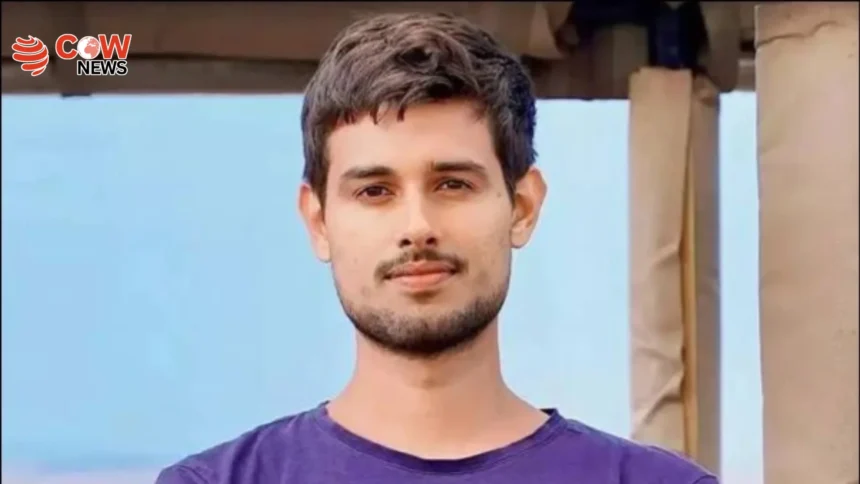
World ( The cow news digital ) A satirical online movement known as the “Cackroach Janta Party” has gained widespread attention after reportedly accepting a key demand made by popular YouTuber Dhruv Rathee, fueling speculation over whether he will formally join the campaign.
The movement, which began as a social media satire, was launched in response to a controversial remark attributed to India’s Chief Justice referring to students as “cockroaches.” What started as a humorous online protest has now evolved into a broader digital campaign addressing social and political issues.
According to reports, the campaign’s Instagram page has rapidly grown from a niche satire account into a large online community, attracting millions of followers in a short span of time.
The initiative was founded by Abhijeet Dipke, who initially framed it as a satirical expression. However, it has since transformed into a platform where young people are voicing concerns over unemployment, corruption, and challenges within the education system.
Dhruv Rathee, in one of his recent video blogs, expressed support for the movement, stating that it should not be dismissed as political propaganda. He described it as a reflection of growing frustration among young people regarding systemic issues affecting their future.
He particularly highlighted concerns surrounding alleged irregularities in competitive examinations, including the NEET paper leak controversy, arguing that such incidents have severely impacted students’ trust in the education system.
Rathee further suggested that if the movement formally includes the demand for the resignation of the Education Minister, he would consider joining it. This statement has sparked widespread discussion online about his potential involvement in the campaign.
Following this, the movement’s organizers reportedly intensified their call for accountability, specifically targeting education authorities and demanding structural reforms.
Read more
Social media users are now closely watching whether Dhruv Rathee will officially align himself with the campaign or continue to support it from the outside.
The development highlights how digital activism and satire are increasingly blending into mainstream political discourse in South Asia.