
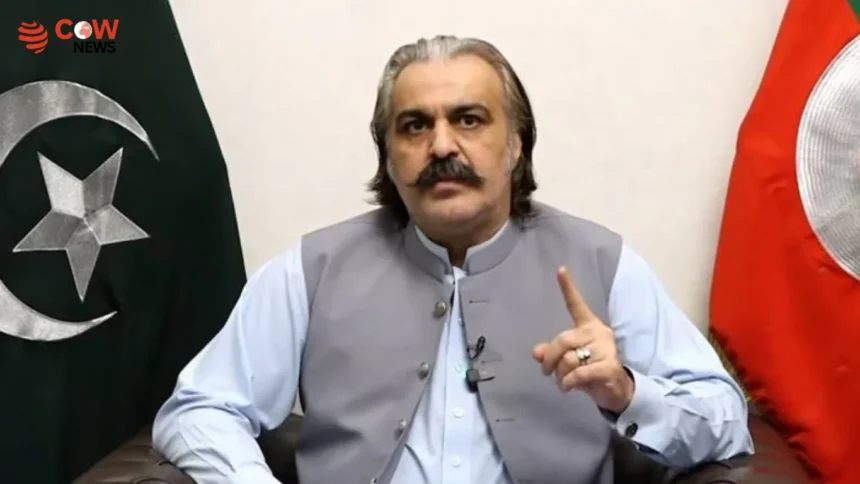
National ( The cow news digital ) Senior Pakistan Tehreek-e-Insaf (PTI) leader and former Chief Minister Ali Amin Gandapur has sharply criticized a recent party statement, describing it as a sign of “dictatorship” within the party ranks.
Gandapur’s remarks were captured in an audio message shared on the party’s parliamentary WhatsApp group, which was obtained by Geo News. In the recording, he recalled that during his tenure, provincial party presidents often voiced dissent against his government, yet no formal statements or notifications were issued against them.
He emphasized that members expressing disagreement should not be threatened through official declarations. “I am offering free advice that grievances of dissatisfied members should be addressed. A dictatorial approach will only worsen the situation,” Gandapur stated.
The comments come amid escalating tensions within PTI’s Khyber Pakhtunkhwa chapter, where the leadership has directed parliamentary committees not to engage with disgruntled members. This directive coincides with the issuance of an official notification halting ongoing negotiations with dissenting party members.
Other party leaders have also weighed in. Mushtaq Ghani noted that no party discipline had been violated, and the only “offense” cited was mentioning the name of PTI’s founder. Iqbal Idris Khattak added that the notification appeared to treat raising the founder’s name as a punishable act.
The internal dispute highlights broader concerns about centralized decision-making within PTI, with critics arguing that the leadership’s hardline stance could alienate loyal members and undermine internal cohesion. Gandapur’s comments underline the growing frustration among party members who feel sidelined or intimidated by official communications.
Political analysts suggest that such divisions could have wider repercussions, particularly ahead of upcoming provincial and national political events. The party’s approach to handling dissent may impact public perception and voter confidence, especially in Khyber Pakhtunkhwa, a key PTI stronghold.
Read more
- US Envoy Backs Israel’s Claim to Wider Middle East
- Trump Hopes Iran Talks Succeed, Warns Against Midnight Hammer
While PTI’s top leadership maintains that the statement is necessary to enforce party discipline, Gandapur’s remarks underscore the delicate balance between maintaining control and fostering internal debate. Observers note that how the party navigates this internal rift could influence its future political strategy and cohesion.
The situation remains fluid, with close attention being paid to reactions from both rank-and-file members and senior leadership across PTI.