
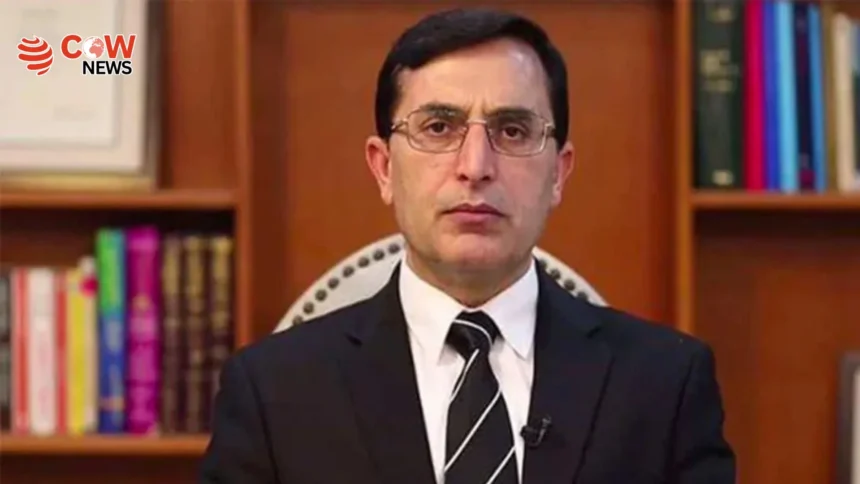
National ( The cow news digital ) Chairman of Pakistan Tehreek-e-Insaf (PTI) Barrister Gohar Ali Khan has accused Prime Minister Shehbaz Sharif of making key decisions without consulting the federal cabinet, raising concerns over governance and transparency.
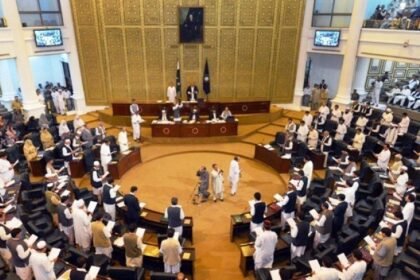
Speaking during a session of the National Assembly, Barrister Gohar alleged that several important policy decisions were taken unilaterally by the prime minister, bypassing the cabinet’s collective decision-making process. He urged the government to adhere strictly to legal and constitutional frameworks in all matters of governance.
“Whatever decisions are made, they must not bypass the law,” he said, emphasizing the need for institutional accountability. His remarks were part of a broader criticism of the government’s handling of economic and policy issues.
The PTI leader also questioned the recent increase in petroleum prices, stating that despite lengthy explanations from the petroleum minister, the government failed to clearly justify the reasons behind the hike. He noted that while fuel prices have risen in multiple countries globally, Pakistan’s taxation on petroleum products remains significantly high.
Barrister Gohar highlighted that the burden of rising prices is being felt most by ordinary citizens. “Households are struggling to make ends meet, while there is no visible reduction in government expenditures,” he remarked.
He further criticized the prime minister for not regularly attending parliamentary sessions, calling it a departure from democratic norms. According to him, parliamentary engagement is essential for addressing public concerns and ensuring accountability.
The PTI chairman also raised questions about government initiatives, including the announcement of free transportation services. He argued that the government has yet to clarify who benefited from such schemes and whether subsidies are being distributed fairly.
read more
- China Urges Global Support for Sustainable Sudan Solution
- Pakistan, Taliban, and Afghanistan: The Complex Triangle of Influence
He stressed that subsidies should only be provided to deserving individuals and warned against misuse of public funds. Additionally, Barrister Gohar questioned the government’s claims regarding its role in international mediation efforts, suggesting that such assertions should be backed by tangible outcomes.
The statement reflects ongoing political tensions between the ruling government and opposition parties, particularly on issues related to economic management and governance practices.
As debates continue in parliament, analysts note that such exchanges are likely to shape the political narrative in the coming weeks, especially amid economic challenges and public scrutiny of policy decisions.