

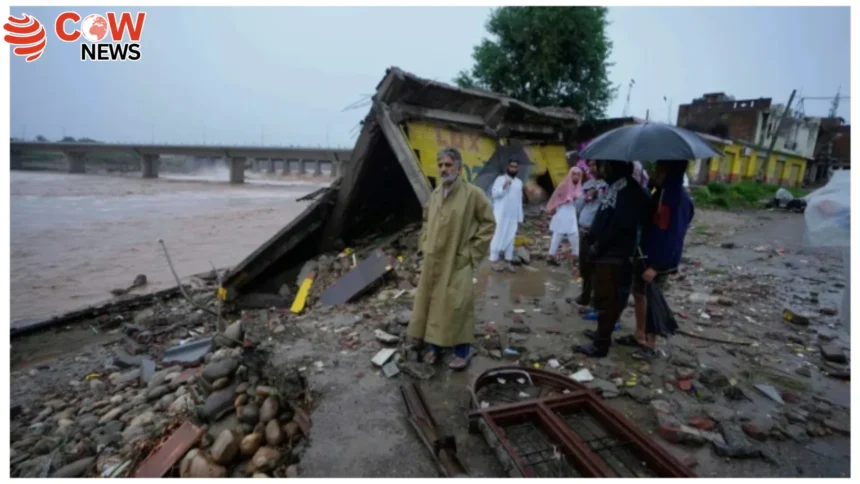
Occupied Kashmir ( The COW News Digital)Occupied Kashmir is reeling under devastating floods after record-breaking rainfall shattered a 50-year record, leaving destruction across the valley. Torrential downpours measuring 360 millimeters caused rivers to overflow, breaking protective embankments and sweeping away dozens of bridges and key road networks.
According to local reports, the disaster has left at least 30 people dead in the Kashmir valley, while in Jammu and Doda, the death toll has risen to 37 due to landslides and flash floods. Authorities warn that the death toll could rise further as rescue teams struggle to reach remote areas cut off by damaged infrastructure.
The flooding has also led to severe communication breakdowns, with mobile internet, broadband, and telephone services suspended across large parts of the valley. This disruption has compounded the difficulties faced by residents trying to contact loved ones and emergency services.
The Jhelum River has risen above the danger mark, raising fears of further flooding in surrounding areas. Schools and educational institutions across the region remain shut for public safety, and officials have extended closures as heavy rains are forecast to continue.
Beyond Kashmir, northern India has also been hit hard. In Himachal Pradesh and Punjab, rivers in Manali and Pathankot have overflowed, washing away homes, commercial structures, and vehicles parked along riverbanks. Videos circulating on social media show buildings collapsing into raging floodwaters, underscoring the scale of destruction.
Disaster management authorities are on high alert, deploying rescue teams, boats, and helicopters to assist stranded residents. However, blocked roads and ongoing landslides have significantly hampered relief operations. Experts warn that the scale of the disaster highlights the region’s vulnerability to extreme weather events, made worse by inadequate infrastructure and climate change-induced rainfall patterns.
Meteorological departments have predicted that heavy rainfall will continue over the next 48 hours, heightening fears of more flash floods and landslides. Locals have been urged to evacuate low-lying areas and avoid crossing rivers or streams.
The crisis has once again raised questions about the region’s disaster preparedness and emergency response systems, particularly in areas where political instability and communication blackouts add to the suffering of residents.
As Occupied Kashmir and neighboring Indian states grapple with the unfolding humanitarian crisis, the full scale of damage and recovery challenges will likely become clear only after the rains subside.