
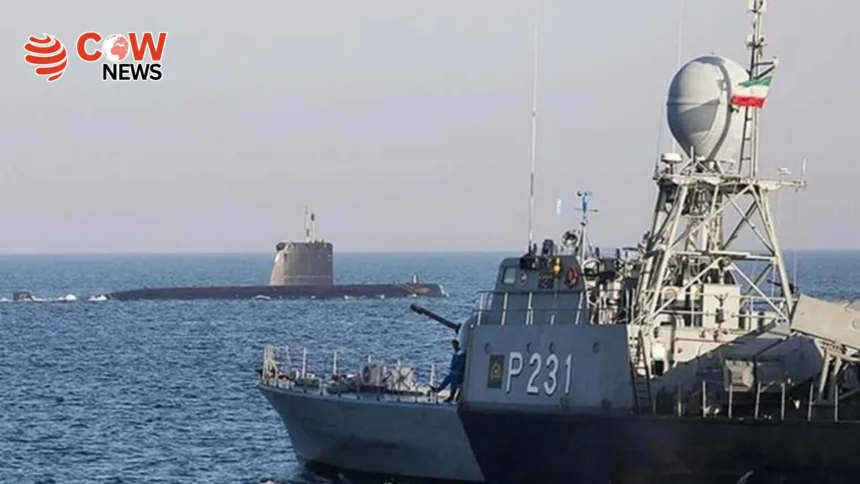
TEHRAN(The COW News Digital) Iranian Revolutionary Guard Corps has initiated a series of naval exercises in the strategic Strait of Hormuz, underlining Tehran’s commitment to maintaining operational readiness in one of the world’s most critical maritime chokepoints. The drills, named “Smart Control of the Strait of Hormuz,” are being closely monitored and overseen by Major General Mohammad Pakpour, commander of the Revolutionary Guard Navy, according to Iranian news agencies.
The exercises aim to evaluate the operational preparedness of naval units and to test response strategies in the event of potential security or military threats in the area. Officials highlighted that the drills also focus on Iran’s ability to leverage its geographic and strategic position in the Persian Gulf and Gulf of Oman effectively.
Iranian authorities stated that the maneuvers include simulated maritime threats and coordinated responses between multiple units, designed to enhance command-and-control efficiency, combat readiness, and rapid deployment capabilities. While the details of specific assets involved have not been fully disclosed, analysts suggest that both surface and aerial components of the Revolutionary Guard Navy are participating.
Read More:
- Deadly Islamabad Attack Highlights Pakistan’s Regional Challenges
- Pakistan’s Silence Spoke Loudly and World Cricket Felt the Shock
- Trump Hopes Iran Talks Succeed, Warns Against Midnight Hammer
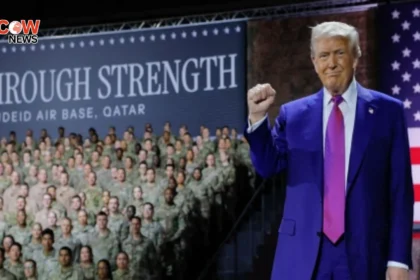
The announcement of these drills comes at a time of heightened regional tensions. Reports indicate that the move coincides with statements by the U.S. President signaling the potential deployment of an additional aircraft carrier to the Middle East. Experts say such demonstrations serve both defensive and deterrent purposes, signaling Iran’s resolve to protect key shipping routes and assert influence in a region vital to global energy supply.
International observers have noted that naval drills in the Strait of Hormuz frequently attract global attention due to the waterway’s strategic importance, as a significant portion of the world’s petroleum passes through it daily. Tehran’s decision to conduct these operations now underscores its focus on security, readiness, and regional influence amid ongoing geopolitical dynamics.
While the exercises are currently in progress, officials stressed that their primary goal is operational assessment and preparation rather than confrontation. Analysts continue to monitor the situation closely, noting the potential implications for maritime traffic, regional security, and diplomatic engagement in the Persian Gulf.