
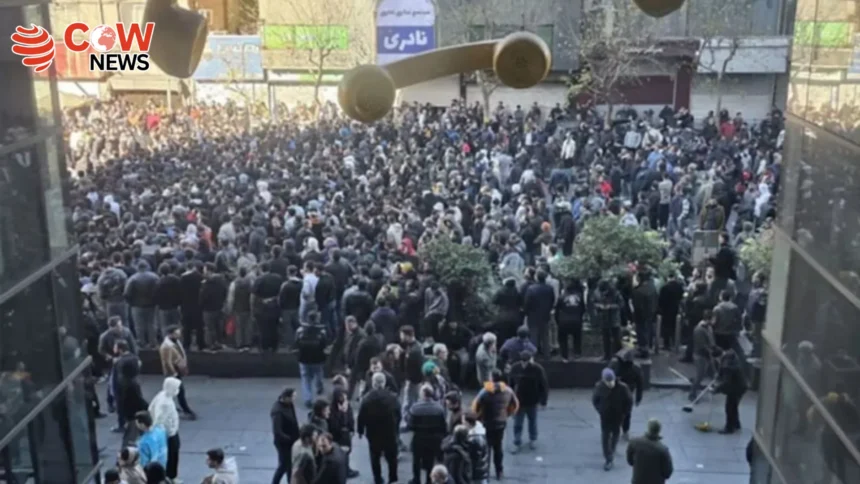
Tehran(The COW News Digital) Widespread protests across Iran have now reached 78 cities in all 26 provinces, with clashes between demonstrators and security forces resulting in at least 19 deaths and hundreds of injuries. According to the human rights monitoring agency HRANA, over 50 protesters were wounded in shootings, while security forces have detained 990 individuals during the escalating unrest.
Despite heightened security measures, including the deployment of additional police and paramilitary forces, the protests continue to grow. The demonstrations have entered their ninth consecutive day, with university students actively participating alongside local citizens. HRANA reports that the authorities have employed live ammunition, tear gas, and mass arrests in attempts to suppress the protests and prevent them from spreading further.
In response to the unrest, the Iranian government announced an economic relief measure, pledging a monthly allowance of $7 to citizens for the next four months. Officials hope this initiative will alleviate some of the financial pressures fueling public discontent.
Meanwhile, Iranian Parliament Speaker Mohammad Bagher Ghalibaf emphasized that the legitimate demands of protesters should be acknowledged. He also warned of potential foreign interference, vowing to prevent external agents from exploiting the situation for political purposes.
Observers note that the protests reflect longstanding social and economic grievances, including inflation, unemployment, and restrictions on civil liberties. The participation of students and young people indicates a broad-based movement that extends beyond local or isolated concerns.
Human rights organizations have expressed alarm over the high number of arrests and casualties, calling on the Iranian government to exercise restraint and uphold international human rights standards. Critics argue that the use of force and mass detentions may exacerbate tensions rather than resolve the underlying issues.
Analysts warn that the situation remains volatile, with the potential for further escalation if authorities fail to address the protesters’ grievances. Social media continues to play a key role in organizing demonstrations and disseminating information, despite government efforts to control communication channels.
The coming days are expected to be critical in determining whether dialogue between the government and citizens can de-escalate the unrest or whether the protests will intensify further, potentially leading to more confrontations and casualties.