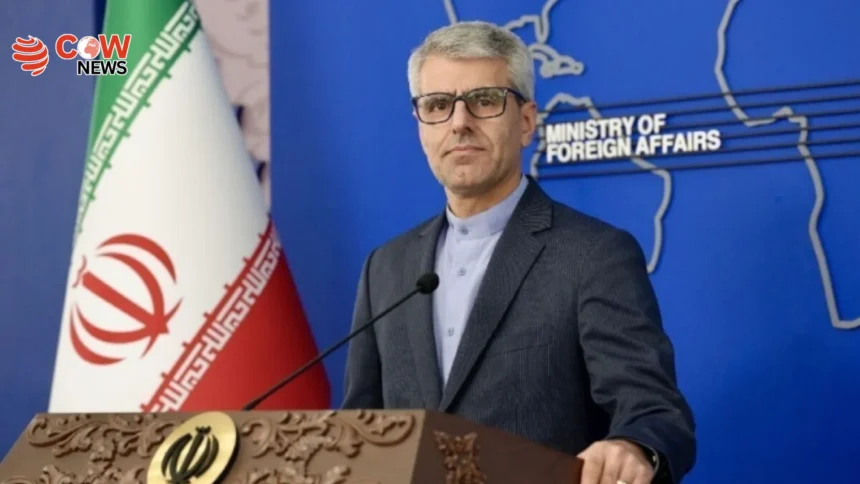
World ( The cow news digital ) The spokesperson for the Ministry of Foreign Affairs of Iran has stated that while progress has been made in discussions with the United States, it is premature to suggest that a final agreement is close.
Speaking during a press briefing in Tehran, foreign ministry spokesperson Ismail Baghaei said that both sides have reached a basic framework in ongoing talks, but significant gaps still remain before any formal deal can be concluded.
He clarified that Iran is currently engaged in discussions aimed at ending regional tensions and reducing conflict, but stressed that nuclear negotiations are not part of the present round of talks. His remarks come amid growing international speculation about renewed diplomatic engagement between Tehran and Washington.
According to Baghaei, the current discussions include a 14-point memorandum of understanding focused primarily on de-escalation of conflict and the possible lifting of restrictions affecting maritime security operations in the region. In return, Iran would take steps to ensure safe navigation in the strategic Strait of Hormuz, a vital global shipping route.
He further emphasized that Iran has no intention of imposing tolls on the Strait of Hormuz. However, he noted that charging service fees for maritime assistance and operational support is a normal international practice and should not be confused with toll collection.
Baghaei also stated that the potential agreement could include provisions aimed at ending hostilities across multiple regional fronts, including Lebanon and other conflict-affected areas. However, he cautioned that these elements are still under discussion and nothing has been finalized.
Addressing regional diplomatic outreach, he confirmed that there are currently no plans for Pakistan to send any delegation in relation to these talks.
The comments highlight a cautious diplomatic tone from Tehran, reflecting both willingness to engage in dialogue and reluctance to signal premature optimism. Analysts suggest that while a framework may exist, substantial political and technical hurdles remain before any binding agreement can be reached between Iran and the United States.
The situation continues to evolve as regional and global stakeholders monitor developments closely, particularly given the strategic importance of maritime security and broader Middle East stability.