
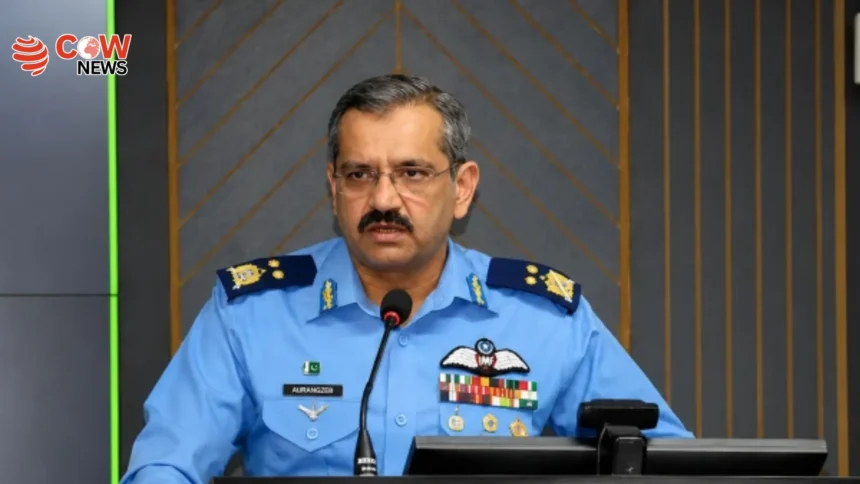
National (The COW News Digital) A senior Pakistan Air Force official has stated that Pakistan achieved decisive air superiority during “Ma’rka-e-Haq,” claiming that Indian forces were unable to operate effectively near Pakistani airspace during the reported confrontation. This situation highlights the strategic importance of air power in modern warfare and the ongoing regional tensions in South Asia.
Pakistan’s Strategic Air Defense
Addressing a joint press briefing alongside officials from the Inter-Services Public Relations (ISPR) and the Deputy Chief of Naval Staff, Air Vice Marshal Tariq Mehmood Ghazi elaborated on the historical context of the Pakistan Air Force’s operations. He stated that the Pakistan Air Force (PAF) demonstrated what he described as a “historic operational success” in defending the country’s aerial frontiers. This achievement is not just a testament to the prowess of the PAF but also a reflection of the strategic planning and adaptability of the armed forces in face of evolving threats.
He stated that Pakistan’s armed forces remain fully prepared to defend national sovereignty in both peace and wartime conditions. According to him, the air force maintained continuous surveillance of hostile activity and monitored what he termed as “digital footprints” of opposing forces during the period of heightened tensions. This vigilance is part of a broader strategy that emphasizes the integration of technology and intelligence in military operations, which is essential for modern defense mechanisms.
The air vice marshal claimed that India attempted to deploy a naval and aerial formation during May last year, but Pakistan’s defensive posture prevented any close approach to its borders. He added that coordinated air defense systems and surveillance networks forced the opposing side to reposition its forces. This incident underscores the critical importance of advanced radar systems and real-time intelligence sharing among various branches of the military in ensuring a robust defense against potential incursions.
He further said that Pakistani forces maintained strong defensive safeguards along the border and conducted regular operational flights as part of an integrated tri-services strategy. He also highlighted the role of cyber capabilities, stating that enemy communications were disrupted during the engagement phase. This multi-faceted approach not only enhances the security of airspace but also showcases the evolving nature of warfare where cyber operations play a crucial role in shaping outcomes on the battlefield.
In one of the most striking claims of the briefing, Air Vice Marshal Ghazi stated that Pakistan shot down eight Indian aircraft, including four Rafale jets, along with an unmanned aerial vehicle. He described the outcome as a “0–8 score,” suggesting a complete tactical advantage in the aerial encounter. This claim, if verified, could have significant implications for future military engagements and the strategic balance of power in the region.
He added that the opposing side is still attempting to analyze the events of the confrontation, indicating that the outcome has had a lasting strategic impact. According to his remarks, Pakistan’s air operations effectively prevented hostile aircraft from approaching its airspace. This assertion emphasizes the psychological and strategic dimensions of military engagements, where perceptions of strength and capability can deter future threats.
The statements come amid continued public and official discussion around “Ma’rka-e-Haq,” a term used domestically to describe recent military tensions. However, independent verification of battlefield claims from either side has not been provided publicly. This highlights the challenge of information warfare, where narratives are crafted to bolster national pride and morale, often obscuring the complexities of the actual events.
Military analysts note that such statements typically form part of strategic communication during periods of heightened regional sensitivity, particularly between nuclear-armed neighbors. The implications of such communications extend beyond immediate military concerns, influencing diplomatic relations and geopolitical stability in the region.
The briefing concluded with a reaffirmation that Pakistan’s armed forces remain committed to defending national airspace and maintaining operational readiness across all domains. This commitment reflects a broader strategic vision that prioritizes national security and the safeguarding of sovereignty in an increasingly complex global landscape.
In conclusion, the events of Ma’rka-e-Haq represent a significant moment in the ongoing military engagements between Pakistan and India. As both nations navigate the complexities of air warfare and regional security, the lessons learned from these confrontations will shape future military doctrines and strategies. The commitment of Pakistan to maintain air superiority not only serves national interests but also impacts regional stability and the broader geopolitical landscape.
Moreover, the geopolitical landscape surrounding Pakistan, including relationships with neighboring countries and global powers, plays a crucial role in shaping military strategies. Partnerships and alliances can influence the types of technology and support available to the Pakistan Air Force, affecting its operational capabilities. The dynamics of international relations are increasingly intertwined with military effectiveness, making diplomatic engagement as vital as battlefield success.
read more
- China Urges Global Support for Sustainable Sudan Solution
- US Envoy Backs Israel’s Claim to Wider Middle East
The strategic significance of air superiority cannot be overstated, especially in the context of India’s growing military capabilities. As India continues to modernize its air force, Pakistan must adapt its strategies to maintain a competitive edge. This situation calls for continuous evaluation of tactics, procurement of advanced systems, and enhanced training programs for personnel to ensure readiness against potential threats.
Furthermore, the developments surrounding the Ma’rka-e-Haq operation have ignited discussions about the future of air combat and the technological advancements that will shape military capabilities. Innovations such as drone technology and advanced missile systems are becoming crucial factors that may redefine traditional combat strategies. As nations invest in their aerial capabilities, the balance of power in the region could shift, leading to new dynamics in military alliances and conflicts.