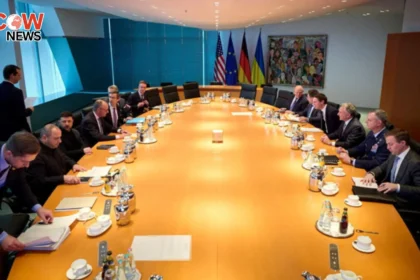


Washington(The COW News Digital)US President Donald Trump has announced the formation of a “Board of Peace” for Gaza, signaling a new diplomatic initiative aimed at stabilizing the war-torn territory and shaping its future governance.
In a statement shared on his social media platform Truth Social, President Trump said the names of the members of the Gaza Board of Peace would be announced soon. He described the initiative as part of a broader effort to promote peace, security, and long-term stability in the region following months of conflict.
Alongside the peace board, President Trump also revealed plans to establish a Palestinian technocratic committee to manage Gaza’s administrative affairs. According to the announcement, the proposed committee would consist of professional, non-political experts tasked with overseeing governance, reconstruction, and essential public services. The move appears to be aimed at separating day-to-day administration from militant and factional politics.
Read More:
- Trump Warns Iran, Says Response Does Not Mean Troop Deployment
- UK and France Agree on Troop Deployment for Ukraine
- White House Says Military Option Open for Greenland
The announcement comes amid ongoing international discussions about Gaza’s post-conflict future. US officials had earlier indicated that further details regarding a proposed international stabilization force would be shared within two weeks. The force is expected to play a role in maintaining security and supporting humanitarian operations during a potential transition period.
American officials have also acknowledged Israel’s concerns regarding the disarmament of Hamas. According to sources, Israeli authorities remain skeptical that Hamas will voluntarily lay down its weapons. To address these concerns, US officials said that direct and indirect talks would be held to ensure that any disarmament process is credible, verifiable, and sustainable.
President Trump’s latest remarks suggest that Washington is exploring a multi-layered approach combining diplomacy, governance reform, and security arrangements. The creation of a peace board and a technocratic governing body reflects growing international consensus that Gaza’s future requires a new administrative framework capable of delivering stability and rebuilding trust.
Analysts say the proposed initiatives could face significant challenges, including political divisions among Palestinians, security risks on the ground, and differing positions among regional stakeholders. However, they note that the announcement represents a clear signal that the United States intends to remain actively engaged in shaping Gaza’s post-war landscape.
Humanitarian organizations have repeatedly warned that Gaza’s infrastructure has been severely damaged, with urgent needs in healthcare, housing, water, and electricity. Any new governance structure, experts argue, will need strong international backing and local acceptance to function effectively.
As details of the Board of Peace and the technocratic committee are awaited, regional and global actors are closely watching how these proposals will translate into concrete action. The coming weeks are expected to be critical in determining whether these initiatives can gain the momentum needed to contribute to lasting peace in Gaza.