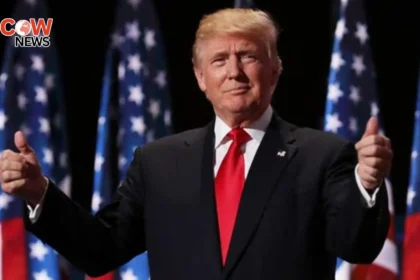

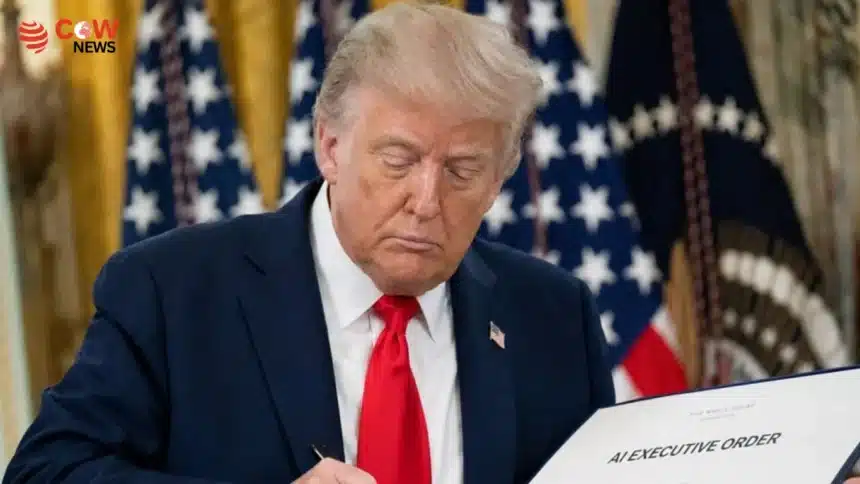
World ( The cow news digital ) Reports emerging from Washington and international diplomatic circles suggest that US President Donald Trump has announced the signing of a significant agreement with Iran, aimed at de-escalating tensions and establishing a framework for a ceasefire and nuclear-related restrictions. According to statements attributed to senior US officials, the agreement was signed by President Trump and Vice President JD Vance, marking what the administration describes as a major diplomatic breakthrough in ongoing Middle East tensions.
A White House senior official confirmed that the signing reportedly took place recently, with further details of the agreement expected to be released within the next 24 to 48 hours. The agreement is said to include commitments related to Iran’s nuclear program, reduction of regional hostilities, and phased adjustments in US military positioning, contingent upon Iran’s compliance with the outlined terms.
An unnamed US official further claimed that electronic signatures were also involved, with participation reportedly extending to Iranian parliamentary leadership. However, questions have already emerged regarding the visibility of Iran’s top leadership in the agreement process, raising debate over the legal and diplomatic framework underpinning the deal.
During remarks made ahead of the G7 summit in France, President Trump stated that Iran has agreed not to pursue nuclear weapons and that the agreement reflects extensive negotiations conducted in a constructive environment. He also suggested that the Strait of Hormuz, a critical global energy passage, has already seen partial reopening, with expectations of full reopening in the coming days.
The US administration has emphasized that sanctions relief for Iran would be strictly conditional, dependent on verified compliance with all terms of the agreement. Officials noted that any failure to adhere to the commitments could result in a reversal of progress and a return to previous levels of tension.
Read more
- US Envoy Backs Israel’s Claim to Wider Middle East
- Pakistan, Taliban, and Afghanistan: The Complex Triangle of Influence
Analysts and policymakers, however, remain cautious, highlighting the lack of publicly available documentation and the absence of confirmed Iranian executive-level acknowledgment. This has sparked ongoing debate about the authenticity, enforceability, and long-term impact of the reported agreement.
As global markets and diplomatic observers await the official release of the agreement details, the development is being closely watched for its potential to reshape US-Iran relations and broader stability in the Middle East.